OG-0664 ATV reviews
ATV Helmets: DOT, Snell and ECE 22.06 Explained, Plus How to Pick One for Kids
By the Offroad Grip editors 8 min read Rev. Nov 8, 2026
Checklist
- Minimum: a DOT FMVSS 218 motorcycle-type helmet, not a bicycle helmet.
- The real DOT label reads DOT, FMVSS No. 218, CERTIFIED on the back.
- Snell M2025 adds third-party and random retail testing plus an oblique impact test.
- ECE 22.06 is the European standard; it adds rotational and extra impact-point tests.
- Snell CM2016 is the children's motorsports standard and covers ATVs.
- Replace a helmet after any severe impact, even without visible damage.
- Bring the child to the store: fit matters more than the label.
Procedure
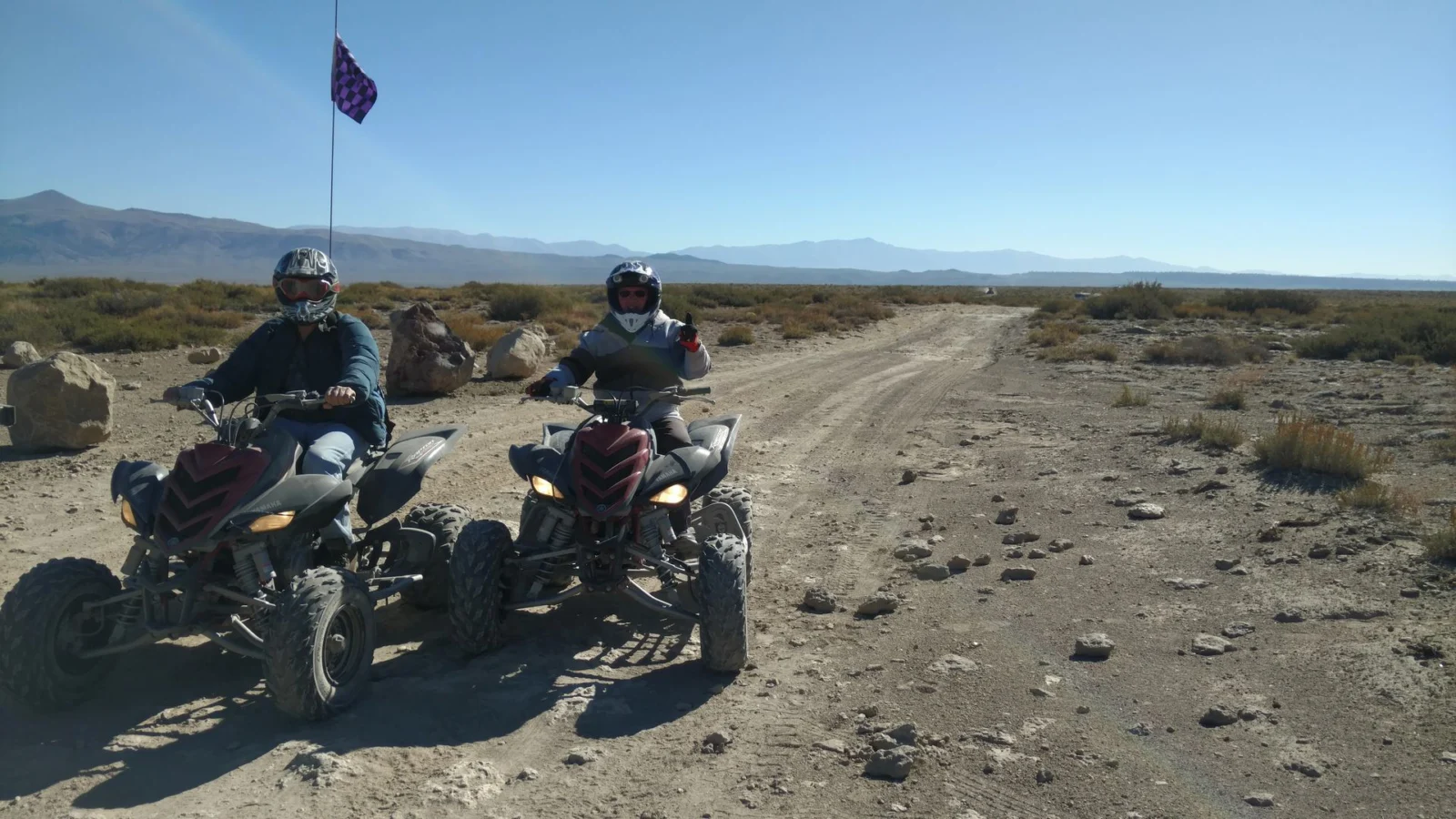
For ATV riding you need a motorcycle-type helmet certified to DOT FMVSS 218, the federal motorcycle helmet standard. The U.S. Consumer Product Safety Commission’s helmet guide lists ATV riding under motocross and motorcycle helmets, and the ATV Safety Institute’s Golden Rules start with a DOT-compliant helmet, goggles, long sleeves, long pants, over-the-ankle boots and gloves. Most ATV riders wear an off-road (motocross-style) full-face helmet with goggles.
Snell M2025 and ECE 22.06 are stricter certifications you can look for on top of DOT. For children, Snell CM2016 is a standard written specifically for small helmets in children’s motorsports, ATVs included. The CPSC is blunt about the stakes: from 2018 to 2020 there were 2,448 off-highway vehicle deaths in the US, ATVs accounted for more than two-thirds of them, and nearly 300 of those killed were children under 16.
DOT, Snell and ECE 22.06 compared
| Standard | Who sets it | Required? | Who certifies | Notable tests |
|---|---|---|---|---|
| DOT FMVSS 218 | NHTSA (US federal) | Yes, for helmets sold in the US for motorcyclists and other motor vehicle users | The manufacturer self-certifies; NHTSA does compliance testing | Impact attenuation, penetration, retention strap, peripheral vision |
| Snell M2025D / M2025R | Snell Foundation (nonprofit) | No, voluntary | Snell lab tests before certification and buys retail samples afterward | Higher-energy impacts plus a new oblique (rotational) impact test |
| ECE 22.06 | UN Economic Commission for Europe | Required in Europe and many other countries, not in the US | Type approval granted by national approval authorities | More impact points, rotational tests, visor tests |
| Snell CM2016 | Snell Foundation with the FIA | No, voluntary | Snell | Small headforms only, with a maximum weight per size |
The most useful single fact in that table: a helmet sold in the US for motor vehicle use has to meet FMVSS 218 whatever else it carries. Snell writes its M2025D standard for helmets that also meet DOT, and M2025R for helmets that also meet ECE 22.06.
What DOT FMVSS 218 actually tests
FMVSS 218 applies to “all helmets designed for use by motorcyclists and other motor vehicle users,” which is why ATV riders use it. Under the regulation text in 49 CFR 571.218, a helmet must pass:
- Impact attenuation. Peak acceleration of the headform must not exceed 400g. Acceleration above 200g may last no more than 2.0 milliseconds in total, and above 150g no more than 4.0 milliseconds.
- Penetration. A pointed striker dropped on the shell must not touch the headform inside.
- Retention. The chin strap must hold the test load without separating and without stretching more than 1 inch.
- Vision and shape. At least 105 degrees of peripheral vision to each side, no rigid projections inside the shell, and outside projections no more than 0.20 inch.
Size matters in the test. Helmets marked up to size 6 3/4 (European size 54) are tested on the small headform, which is how youth helmets are checked. The standard also requires an inside label with the maker’s name, size, month and year of manufacture, and this instruction: if the helmet takes a severe blow, return it to the manufacturer for inspection, or destroy and replace it.
How to spot a real DOT label
The certification label goes on the outside back of the helmet, centered, with the DOT symbol 1 to 3 inches above the bottom edge. It shows the manufacturer’s name or brand and the model on top, then DOT, then FMVSS No. 218, then CERTIFIED, and nothing else. A sticker that just says “DOT” is a warning sign.
NHTSA warns that some novelty helmet sellers hand out separate DOT stickers, which do not certify anything. Its other red flags: a shell and liner less than about 1 inch thick, no stiff foam inner liner, and a helmet that weighs a pound or less. Novelty helmets offer little or no protection, and CPSC says the same.
Snell M2025 and why riders pay for it
The Snell Foundation is a nonprofit that certifies helmets to its own standards. Its current motorcycle standards, M2025D and M2025R, took effect on August 1, 2024, replacing M2020. Production of M2020-labeled helmets had to end by April 1, 2025, though helmets made earlier may still be on shelves in 2026.
What Snell adds over DOT:
- Third-party testing. Snell tests helmets in its own lab before certifying them, then buys certified models at retail and tests them again. Its FAQ points out that DOT and ECE “rely mostly on helmet manufacturers to police themselves.”
- Oblique impacts. New for 2025, helmets are dropped at 8.0 meters per second onto a 45-degree abrasive anvil to measure rotational acceleration, which must stay under 10,000 radians per second squared.
- Higher-energy impacts. Snell’s tests are built around more severe crashes than the minimum government standards.
The Snell label is inside the helmet, often under the comfort padding, with a bar code and the standard’s year. Snell’s website lets you check a certified helmet by model and size. The trade-off is price: Snell-certified helmets usually cost more.
ECE 22.06 and European-certified helmets
ECE 22.06 is the current version of UN Regulation No. 22, the helmet standard used across Europe and in many other countries. The 06 series entered into force on January 3, 2021, and phased out the older 22.05 approvals in stages. UNECE says 22.06 adds testing at extra impact points, rotational (oblique) impact tests and tests for visors.
In the US, ECE certification on its own is not the legal requirement. A helmet sold here for motor vehicle use still needs to meet FMVSS 218, so look for both the ECE label and the DOT label on helmets imported from European brands. Many premium off-road helmets now carry DOT and ECE 22.06, and some carry Snell as well.
ATV helmets for kids
A child riding an ATV needs the same type of helmet as an adult, a DOT FMVSS 218 motorcycle-type helmet, in a youth size. The CPSC’s helmet guide lists Snell CM2016 alongside DOT for motorized riding. CPSC describes CM2016 as a standard for small helmets aimed at youth in children’s motorsports, including ATVs, motorcycles and go-karts, with a maximum weight for each headform size so a child’s neck is not overloaded. Snell has published a draft successor, CM2027, but CM2016 is the standard to look for as of 2026.
How to fit a child’s helmet:
- Bring the child. CPSC says to take the child along so the helmet can be checked for fit before you buy.
- Measure, then try on. Measure head circumference just above the eyebrows and ears and use that brand’s size chart. Sizes are not consistent between brands.
- Check it is snug. With the strap fastened, the helmet should sit level, not tilted back, and should not move side to side or front to back. Snell’s test: try to roll it forward off the head from the back, then back from the brow. If it comes off, it is too big.
- Wear it 5 to 10 minutes. Snell suggests leaving a new helmet on that long to find pressure points before you commit.
- Do not size up. A helmet bought to grow into is loose today. Snell notes most people buy a motorcycle helmet one size too big.
- Add goggles that fit the helmet’s eye port, and make sure the child can see clearly to the sides.
The helmet is only half of youth safety. CPSC says riders younger than 16 should drive only age-appropriate youth ATVs, never adult models, and the ATV Safety Institute says they should be supervised by an adult. Youth ATVs carry an age-group label from the industry standard (Y-6+, Y-10+, Y-12+ or T for transition models), and that label is on the machine for a reason. Our guide to how much an ATV weighs shows that even youth models weigh about 220 to 290 lb, well over the rider.
Which helmet style suits ATV riding
| Style | Chin protection | Eye protection | Fits ATV riding |
|---|---|---|---|
| Off-road / motocross | Yes, extended chin bar | Separate goggles | The usual choice: good airflow, peak blocks sun and roost |
| Dual-sport / adventure | Yes | Built-in visor, can also take goggles | Good for trail rides with road crossings and dusty conditions |
| Full-face street | Yes | Visor | Works, but runs hot at low trail speeds |
| Open-face or half helmet | No | Separate | Leaves the face and jaw exposed in a rollover or fall |
For sport riding on quads such as the Yamaha YFZ450R or Raptor 700, a motocross helmet and goggles are standard. For slower work and trail riding on a utility quad like the Grizzly 700 or Kodiak 700, many riders prefer a dual-sport helmet for its visor. Avoid add-ons such as horns or spikes; CPSC warns they can stop the shell sliding in a fall, and stickers or attachments not supplied with the helmet can affect how it performs.
Prices, laws and when to replace
As of 2026, a DOT-certified youth off-road helmet typically costs about $60 to $200, an adult DOT off-road helmet about $100 to $350, and helmets with Snell or ECE 22.06 certification commonly $300 to $800 or more. Price follows materials (polycarbonate versus fiberglass or carbon composite shells), weight, ventilation and extra certifications. Goggles are a separate purchase for off-road helmets.
Helmet laws for ATV riders are set by states and land managers, and they vary: some apply only to riders under a certain age, some to all riders on public land or trails, and some to no one. Check your state’s off-highway vehicle program and the rules of the trail system before you ride. The federal agencies’ advice does not vary: always wear one.
Replace a helmet:
- After any crash or severe blow. CPSC says helmets designed for a single impact must be replaced even with no visible damage, because the foam crushes once.
- After about five years of normal use. Snell recommends this because pads and foam wear and the helmet loosens, often by one or two sizes. CPSC suggests 5 to 10 years from purchase when the maker gives no guidance.
- When you see wear. Cracks in the shell or liner, crushed foam, fading, worn straps or missing pads are all reasons to replace it.
- When a child outgrows it. A helmet that has become tight is no longer the right size.
Before a season starts, check the helmet alongside the machine: a fresh ATV battery gets you started, and a helmet that fits, carries a real DOT label and has never been dropped hard is what gets you home.
Troubleshooting
Owners also ask
Q1 Do you need a DOT helmet for an ATV?
A DOT FMVSS 218 helmet is what federal safety agencies recommend, and many state and public-land rules require helmets for at least some ATV riders, often youth riders. Requirements differ by state and by trail system, so check your state's off-highway vehicle program before riding. Even where no law applies, the CPSC and ATV Safety Institute say to always wear one.
Q2 Can I use a bicycle helmet for ATV riding?
No. Bicycle helmets meet a different federal standard, 16 CFR 1203, built for a single fall from a bicycle. CPSC's helmet guide lists ATV riding under motorcycle-type helmets, certified to DOT FMVSS 218, Snell M2020 or Snell CM2016. An ATV crash involves higher speeds, heavier impacts and the machine itself, and a bicycle helmet has no chin protection.
Q3 What size ATV helmet does my child need?
Measure around the head just above the eyebrows and ears, then use that maker's size chart, because sizes vary between brands. Have the child try it on: it should sit level, feel snug all around, and not roll forward or back with the strap fastened. Never buy a size up to grow into. A helmet that moves on the head can come off in a crash.
Q4 Is Snell better than DOT?
Snell sets tougher impact tests and checks helmets after certification by buying samples at retail and testing them, while DOT relies on manufacturers to certify their own helmets, with limited government spot testing. A Snell M2025D helmet sold in the US must also meet DOT. A DOT-only helmet that fits well still protects far better than no helmet or a poorly fitted premium one.
Q5 How often should you replace an ATV helmet?
Immediately after any crash or severe blow, because the foam liner crushes once and may not show damage. Otherwise, Snell recommends replacement after five years of normal use, and CPSC suggests 5 to 10 years from purchase when the maker gives no guidance. Replace sooner for a cracked shell, crushed foam, loose padding or worn straps.
See also
Next in the manual

ATV reviews
Yamaha Kodiak 700 Review: Top Speed, Specs, Trims, Price and Problems
The Yamaha Kodiak 700 is a 686cc fuel-injected utility ATV with Yamaha's Ultramatic belt transmission and a sealed wet rear brake. For 2027 it costs $8,099 for the base model, $9,499 for the Kodiak 700 EPS with power steering and a locking front differential, and $10,499 for the EPS XT-R. Yamaha publishes no top speed; owners commonly report about 60 mph.

ATV reviews
Yamaha Raptor 700 Buyer’s Guide: Top Speed, Specs, Price and Problems
The Yamaha Raptor 700 is a 686cc fuel-injected sport ATV with a five-speed gearbox and reverse, weighing 422 lb wet. Yamaha does not publish a top speed; owners commonly report about 70 to 75 mph in stock form. For 2027 the Raptor 700 lists at $10,199, the 700R at $10,799 and the 700R SE at $11,199. Yamaha recommends it only for experienced riders 16 and older.

ATV reviews
Yamaha Raptor 350 Review: Top Speed, Specs and a Used Buyer’s Guide
The Yamaha Raptor 350 is a discontinued mid-size sport ATV sold from the 2004 to 2013 model years, so every one is now at least a decade old and bought used. It has a 348cc air-cooled single with a 36mm Mikuni carburetor and a six-speed gearbox with reverse. Yamaha published no top speed; owners commonly report about 55 to 60 mph. Condition and storage history matter more than model year.