OG-0382 ATV reviews
Yamaha Grizzly 700 Review: Top Speed, Horsepower, Specs, Price and Problems
By the Offroad Grip editors 7 min read Rev. Oct 6, 2026
Revision Expanded in October 2026 and re-checked against Jeep owner's manuals, manufacturer data and NHTSA or CPSC records.
- Engine
- 686cc liquid-cooled SOHC single, 44mm fuel injection
- Transmission
- Ultramatic V-belt, H/L/N/R/P
- Drive
- On-Command 2WD, 4WD, locked 4WD
- Suspension travel
- 7.6 in front, 9.1 in rear
- Wet weight
- 701 lb
- Towing
- 1,300 lb
- Rack capacity
- 308 lb
- Ground clearance
- 11.3 in
- 2027 MSRP
- $10,599 to $11,499
- Top speed
- Not published (owners report about 65 mph)
Checklist
- 686cc liquid-cooled single with 44mm fuel injection and Ultramatic belt drive
- Top speed and horsepower are not published; owners report about 65 mph
- 2027 MSRP: $10,599 (EPS), $11,399 (EPS XT-R), $11,499 (EPS Camo)
- 701 lb wet, 1,300 lb towing, 308 lb combined rack capacity
- 2016 to 2018 models used a 708cc engine; 2019 on returned to 686cc
- 2008 to 2010 Grizzly 700s were recalled for a steering column support
Procedure
The Yamaha Grizzly 700, sold today as the Grizzly EPS, is Yamaha’s flagship utility ATV: a 686cc fuel-injected single driving all four wheels through the Ultramatic belt transmission, with On-Command 4WD, a locking front differential and power steering on every trim. Yamaha does not publish a top speed or horsepower. Owners commonly report about 65 mph.
For 2027, the Grizzly EPS lists at $10,599, the EPS XT-R at $11,399 and the EPS Camo at $11,499. It weighs 701 lb wet, tows 1,300 lb and carries 308 lb on its racks. This page covers the Grizzly on its own: specs, model years, problems and who it suits. If you are deciding between it and the cheaper Kodiak 700, our Grizzly vs Kodiak 700 comparison puts the two side by side.
Grizzly 700 top speed and horsepower
Every Grizzly top speed figure is an owner or magazine report, not a factory number. About 65 mph is the figure reported most often for a stock machine. Larger tires, a light rider and hard, flat ground push it up; a loaded rack, mud tires, a trailer or high altitude bring it down.
The more useful point is that a belt-driven utility ATV is not built to run flat out. Sustained high speed heats the belt and the clutch, and the Grizzly’s strengths are low-speed pulling, engine braking on descents and comfort over rough ground. Yamaha describes the Grizzly’s engine tuning as aimed at recreational trail riding, which owners generally read as livelier than the work-focused Kodiak.
Horsepower is not published by Yamaha in the US. Magazine tests of recent Grizzlies describe the 686cc engine as making around 50 horsepower, but treat that as an estimate. Dyno figures measured at the wheels are well below crank figures because the belt and shaft drive absorb power.
2027 Grizzly EPS specs
Figures below are from Yamaha’s Grizzly EPS specification page, with the XT-R differences from the Grizzly EPS XT-R page.
| Spec | Grizzly EPS |
|---|---|
| Engine | 686cc liquid-cooled SOHC four-stroke single |
| Bore x stroke, compression | 102.0 x 84.0mm, 10.0:1 |
| Fuel system | Yamaha Fuel Injection, 44mm |
| Transmission | Ultramatic V-belt with all-wheel engine braking; H, L, N, R, P |
| Drive | On-Command 3-way locking differential: 2WD, 4WD, locked 4WD; shaft drive |
| Front suspension | Independent double wishbone, 5-way preload, 7.6 in travel |
| Rear suspension | Independent double wishbone with anti-sway bar, 5-way preload, 9.1 in travel |
| Brakes | Dual hydraulic discs front and rear |
| Tires | Maxxis 26×8-12 front, 26×10-12 rear (XT-R and Camo: 27-inch Maxxis ‘Zilla on 14-inch aluminum wheels) |
| Ground clearance | 11.3 in (XT-R: 11.8 in) |
| Length x width x height | 81.5 x 48.4 x 49.3 in |
| Seat height / wheelbase | 36.1 in / 49.2 in |
| Wet weight | 701 lb |
| Fuel capacity | 4.8 gal |
| Rack capacity | 308 lb (110 front, 198 rear) |
| Towing | 1,300 lb, 2-inch receiver |
| Warranty | 6-month limited, plus 10-year V-belt limited warranty |
Trims and 2027 prices
- Grizzly EPS, $10,599: the core machine with power steering, LED headlights, 26-inch tires and rear disc brakes.
- Grizzly EPS XT-R, $11,399: adds 27-inch Maxxis ‘Zilla tires on 14-inch aluminum wheels, a factory WARN VRX 25 winch and a larger all-LCD instrument display.
- Grizzly EPS Camo, $11,499: XT-R-style equipment with Realtree Edge camo bodywork.
MSRP excludes freight, setup, tax and title, and dealer pricing varies by region and season. If you would add a winch and bigger wheels anyway, the XT-R package usually costs less than buying them separately.
Grizzly 700 model years and what changed
| Model years | What to know |
|---|---|
| 2007 | Grizzly 700 FI launches with a 686cc fuel-injected engine, Ultramatic transmission and On-Command 4WD |
| 2008 | Grizzly 700 EPS arrives, one of the first ATVs sold with electric power steering |
| 2008 to 2010 | Recalled (CPSC 10-733) for a steering column support that could crack |
| 2016 to 2018 | Uses a 708cc engine; owners widely reported oil consumption on this engine |
| 2019 on | Returns to a revised 686cc engine; 2019 Grizzly owner’s manual recall (CPSC 19-755) for misprinted manuals |
| 2027 | Grizzly EPS, EPS XT-R and EPS Camo; 26-inch tires and LED headlights standard |
Yamaha’s 2007 news release for the 2008 model describes the power steering as varying assistance with vehicle and engine speed, and notes it absorbs steering kickback, acting like a damper. That is still the best argument for EPS: on a 700 lb machine with big tires, it takes most of the fatigue out of a long, rough day.
Common problems and recalls
The CVT belt. The recurring maintenance item on any belt-driven utility ATV. Belts wear fastest under heavy loads at low speed, towing, plowing and crawling in high range. Use low range for that work, keep water out of the belt housing after deep crossings and drain it if water gets in, and do not ride at walking pace in high range, which slips the belt continuously. Yamaha’s 10-year V-belt limited warranty on current models is worth reading, since it excludes abuse and some conditions.
The 708cc years. Owners of 2016 to 2018 Grizzlies widely reported oil consumption from the 708cc engine. Check the oil level and look for blue smoke or a sooty spark plug before buying one, and ask for service records. Yamaha’s return to the 686cc for 2019 is one reason 2019 and later models are popular on the used market.
Steering column recall. About 20,000 Grizzly 550 and 700 ATVs from the 2008 to 2010 model years were recalled in April 2010 because the steering column support assembly could crack and cause loss of steering control, according to the CPSC recall notice. The repair is free at a dealer. Confirm it was done on any used one.
Water and mud. Wheel bearings, CV boots and the belt housing take the punishment on machines ridden hard in mud and water. That is a consequence of use rather than a design fault, but it is where to look on a used Grizzly.
Owning one: maintenance, accessories and hauling it
Service intervals for oil, the final drive and differential fluids, the air filter and valve clearances are in the owner’s manual, and they assume normal use. Shorten them if you ride in dust, mud or water, tow or plow. The air filter is the item most often neglected on utility quads, and on a machine that spends its life in dust it needs checking far more often than the mileage suggests. Grease points and CV boots are worth a look after every muddy ride, because a torn boot lets grit into the joint and turns a cheap fix into an axle replacement.
Popular additions are a plow, a winch if you did not buy the XT-R, hand guards, rack boxes and a heavier-duty skid plate. A plow and a winch both lean hard on the battery and the belt, so use low range for plowing and keep the battery healthy. Before you add accessories, add up the weight against the 308 lb rack rating and the 1,300 lb towing rating.
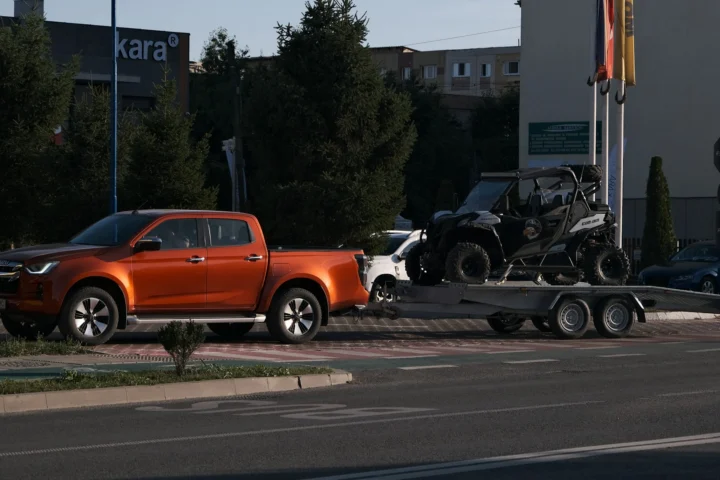
Moving a Grizzly also takes planning. At 701 lb wet before any accessories, one Grizzly plus a trailer is a real load for a small SUV, and two are well beyond some vehicles’ ratings. If you tow with a Jeep, check the Wrangler towing capacity by year before you buy the trailer.
Who the Grizzly 700 suits
The Grizzly is for riders who cover real distance on rough ground: hunters in steep country, landowners with rutted two-tracks and anyone who spends whole days on trails. The extra front travel, 11.3 inches of clearance, larger tires and rear discs are what you pay for over a Kodiak, and they matter most at speed over rough terrain.
If your riding is mostly flat ground, farm chores and plowing, the Kodiak 700 does the same work with the same engine for less money, with a lower 33.9-inch seat that is easier to climb on and off all day. If you want speed and handling with no work ability at all, the same engine family powers the Raptor 700 sport quad with a manual gearbox. The Grizzly is an adult ATV: CPSC guidance says riders under 16 should use only youth models.
Buying a used Grizzly 700
- Run the VIN past a Yamaha dealer for open recalls, especially on 2008 to 2010 models.
- Open the belt housing drain and inspection points if you can, or ask when the belt was last replaced.
- Check for water in the oil, differential and final drive fluids on machines used in mud.
- Test 2WD, 4WD and the diff lock, high and low range, and reverse.
- Turn the bars lock to lock with the engine running to feel for uneven EPS assistance.
- On 2016 to 2018 models, check oil consumption history.
- Jack up each corner and rock the wheel to check bearings and ball joints, and look at the CV boots for splits.
- Look at the hitch and racks for bends or cracked welds, a sign the machine towed or carried more than its ratings.
A Grizzly with a documented belt and fluid history is worth more than a low-hour one with none. Most of the expensive failures on these machines start with a belt or a fluid that was ignored.
Troubleshooting
Owners also ask
Q1 How fast is a Yamaha Grizzly 700?
Yamaha does not publish a top speed. Owners commonly report about 65 mph for a stock Grizzly 700, with tire size, load, rider weight and terrain making a difference of several mph. It is geared through a belt transmission for pulling and trail work, so it is not built for sustained top-speed running, and doing so heats the belt.
Q2 How much horsepower does a Grizzly 700 have?
Yamaha does not list horsepower for the Grizzly in the US. Magazine tests of recent models describe the 686cc engine as making around 50 horsepower, and wheel-horsepower dyno figures are lower because of losses through the belt and driveline. Treat any figure as an estimate rather than a factory rating.
Q3 How much does a Yamaha Grizzly 700 weigh?
Yamaha lists the 2027 Grizzly EPS at 701 lb wet, meaning with fluids and a full 4.8-gallon fuel tank. The XT-R and Camo trims weigh more because they add a winch and larger wheels and tires. Older Grizzly 700s vary by year and equipment, so check the specification for the exact model year.
Q4 What is the Yamaha Grizzly 700 towing capacity?
Yamaha rates the current Grizzly EPS to tow 1,300 lb through a standard 2-inch receiver, and its racks carry 308 lb combined, 110 lb front and 198 lb rear. Use low range when towing heavy loads, which keeps the belt properly engaged and is the single biggest factor in belt life.
Q5 What years of Grizzly 700 should you avoid?
No year is a write-off, but two groups deserve extra checks. On 2008 to 2010 models, confirm the steering column support recall was completed. On 2016 to 2018 models with the 708cc engine, ask about oil consumption, which owners widely reported. A Yamaha dealer can check recall status by VIN for any year.
See also
Next in the manual
ATV reviews
How Much Does an ATV Weigh? Youth, Sport and Utility Weights by Model
A full-size utility ATV weighs about 580 to 950 lb ready to ride, with most 450cc to 700cc models between 600 and 750 lb, such as the 701 lb Yamaha Grizzly EPS. Sport ATVs are lighter at roughly 385 to 425 lb, youth ATVs run about 220 to 290 lb, and side-by-sides weigh 1,000 to 2,000 lb. Check whether a figure is wet (fueled) or dry.

ATV reviews
Yamaha Raptor 350 Review: Top Speed, Specs and a Used Buyer’s Guide
The Yamaha Raptor 350 is a discontinued mid-size sport ATV sold from the 2004 to 2013 model years, so every one is now at least a decade old and bought used. It has a 348cc air-cooled single with a 36mm Mikuni carburetor and a six-speed gearbox with reverse. Yamaha published no top speed; owners commonly report about 55 to 60 mph. Condition and storage history matter more than model year.
ATV reviews
Yamaha Grizzly vs Kodiak 700: Differences, Prices and Which to Buy
The Yamaha Grizzly EPS and Kodiak 700 share the same 686cc fuel-injected engine, Ultramatic transmission, racks and 1,300 lb towing rating. The Grizzly adds more front suspension travel, 26-inch tires, more ground clearance, rear disc brakes, LED headlights and standard power steering, and costs $10,599 for 2027. The Kodiak 700 starts at $8,099, or $9,499 with EPS, and is lower and narrower. Buy the Grizzly for rough trails, the Kodiak EPS for work.