OG-0174 Engine swaps
Jeep Wrangler Diesel Conversion Cost: Real Totals, Legality and the Factory EcoDiesel
By the Offroad Grip editors 7 min read Rev. Oct 6, 2026
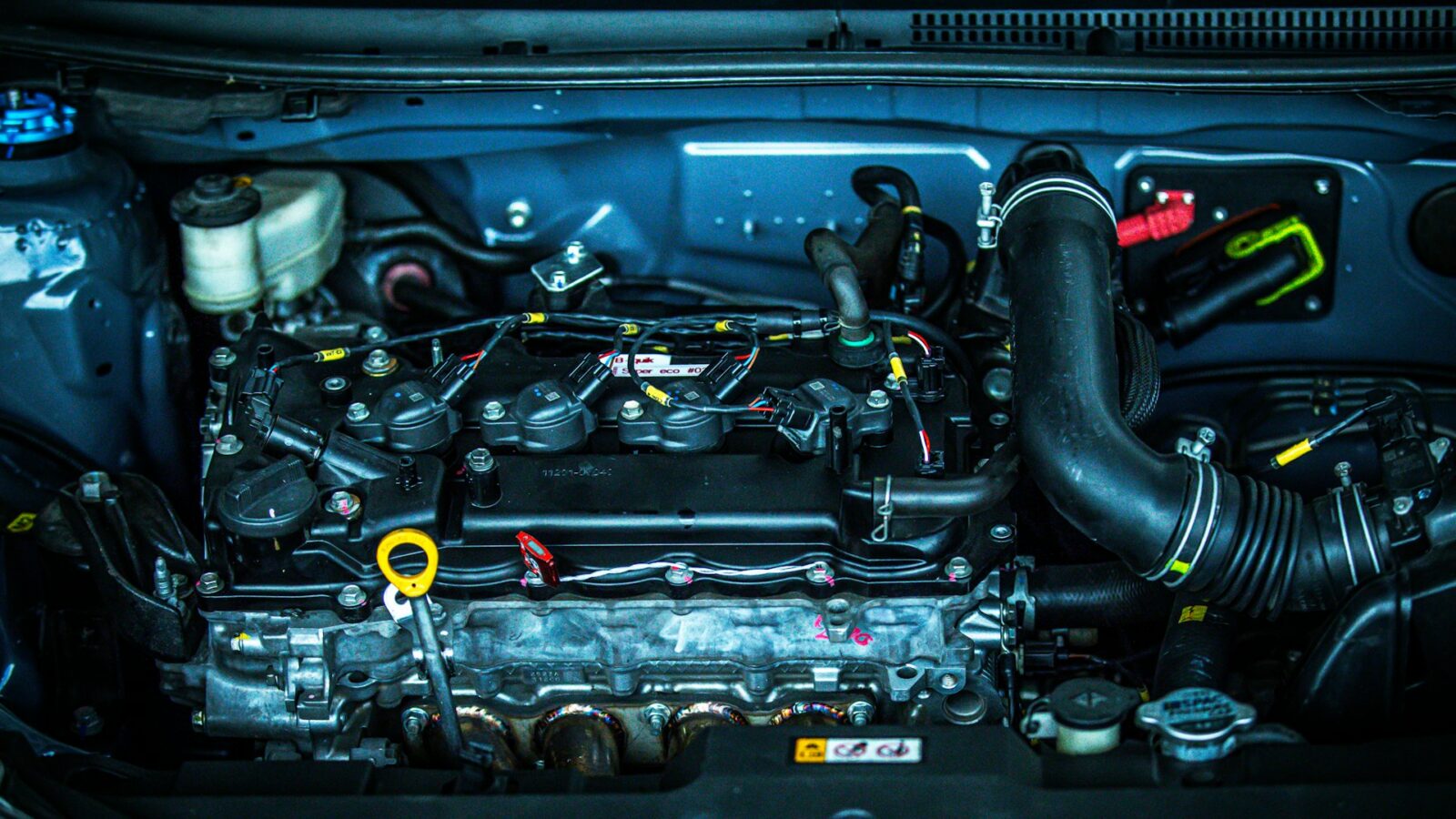
Revision Expanded in October 2026 and re-checked against Jeep owner's manuals, manufacturer data and NHTSA or CPSC records.
Checklist
- Typical totals as of 2026: $15,000 to $30,000 DIY, $35,000 to $60,000+ turnkey
- Jeep sold the 3.0L EcoDiesel JL for the 2020 to 2023 model years, four-door only
- EPA rates the 2020 EcoDiesel Wrangler Unlimited at 25 mpg combined
- In late September 2026, EIA put diesel at $6.38 and regular at $4.47 a gallon
- Federal policy requires a swap to match a certified configuration of the same or newer year
- California does not allow uncertified crate or off-road engines in emissions-controlled vehicles
Procedure
- 01What a diesel conversion costs, line by line
- 02Which diesel engines people put in Wranglers
- 03The factory alternative: the 2020 to 2023 EcoDiesel JL
- 04The payback math, at 2026 fuel prices
- 05The reasons that do hold up
- 06Emissions legality: EPA and California
- 07Buying a used EcoDiesel instead
- 08Who a conversion still makes sense for
A Jeep Wrangler diesel conversion typically costs $15,000 to $30,000 as a home build and $35,000 to $60,000 or more from a specialist shop, as of 2026. The engine is only part of that: adapters, cooling, a diesel fuel system, wiring, exhaust and drivetrain work make up the rest. The fuel savings will not pay it back, and in many states the harder problem is making the result legal to register.
Before pricing a swap, know that Jeep already built a diesel Wrangler. The JL offered a 3.0L EcoDiesel V6 for the 2020 to 2023 model years, and a used one is usually the cheapest and only fully certified way to own a diesel Wrangler in the US.
What a diesel conversion costs, line by line
Typical ranges as of 2026 for a JK or JL. They vary with the engine chosen, whether it is new or used, the generation and who does the labor.
| Component | Typical cost | Why it varies |
|---|---|---|
| Diesel engine (used donor or new crate) | $4,000 to $15,000 | Age, mileage and completeness of a used engine vs a new repower package |
| Transmission adapter, mounts, crossmember | $1,500 to $4,000 | Bolt-in kit for your generation vs fabrication |
| Transmission rated for diesel torque | $1,500 to $6,000 | Reusing the Jeep’s unit, a matched donor or a new gearbox |
| Cooling and intercooler | $1,000 to $2,500 | Diesel heat load at low trail speeds |
| Fuel system: lift pump, filters, lines, return | $800 to $2,500 | Diesel needs filtration and often a return line the gas Jeep lacks |
| Wiring, engine computer, gauge integration | $1,000 to $4,000 | Keeping the cluster, ABS and stability control working |
| Intake and exhaust, with aftertreatment if required | $800 to $5,000 | Simple fabrication vs a modern particulate filter and DEF system |
| Driveshafts, gearing, front springs | $1,000 to $5,000 | New lengths, gearing for diesel rpm, extra weight over the front axle |
| Shop labor | $6,000 to $20,000 | Roughly 50 to 130 hours at $120 to $180 an hour |
A cheap used engine lowers the first line and raises the others: unknown history, adapters you may have to make, and a motor that may need rebuilding before it goes in. Quotes far below these totals usually describe the engine only.
Which diesel engines people put in Wranglers
The engines that appear most often in Wrangler diesel builds each bring a different cost and legal picture:
- Cummins 4BT (3.9L four-cylinder). A simple mechanical diesel from delivery vans and industrial equipment. Cheap and tough, but heavy, rough-running and old, so it fails the same-or-newer test on any JK or JL.
- Cummins R2.8. A 2.8L four-cylinder that Cummins sold as a purpose-built repower package. Swap-friendly, with kits aimed at older Jeeps, but a repower engine is not a certified configuration for a modern Wrangler. Check current availability and pricing directly with Cummins distributors.
- VM Motori 2.8L CRD. The diesel from the 2005 and 2006 Jeep Liberty CRD sold in the US. A Chrysler-family engine, but older than any JK chassis.
- GM 2.8L Duramax. The four-cylinder from the Colorado and Canyon pickups. Modern and newer, but with GM electronics and a full aftertreatment system to integrate.
- Older Mercedes diesels. Five-cylinder engines from 1970s and 1980s cars, popular in budget builds, with the same age problem as the 4BT.
The pattern is clear: the cheap, simple engines are old, and the new ones bring complex emissions hardware and electronics. That is why diesel conversion costs spread so widely.
The factory alternative: the 2020 to 2023 EcoDiesel JL
Jeep sold the 3.0L EcoDiesel in the four-door JL for the 2020, 2021, 2022 and 2023 model years, paired with an eight-speed automatic. FuelEconomy.gov lists no diesel Wrangler for 2024. Jeep rated the engine at 260 hp and 442 lb-ft, with engine stop/start.
| Model (EPA rating) | City | Highway | Combined |
|---|---|---|---|
| 2020 Wrangler Unlimited 4WD 3.0L diesel | 22 | 29 | 25 |
| 2022 Wrangler Rubicon 4-door 3.0L diesel | 21 | 26 | 23 |
| 2023 Wrangler 4-door 3.6L gas (for comparison) | 18 | 23 | 20 |
| 2017 JK Unlimited 3.6L automatic (for comparison) | 16 | 20 | 18 |
A used EcoDiesel gives you low-rev torque, range and an emissions-certified diesel with factory-integrated electronics, for usually much less than a quality conversion. The issues to check are the high pressure fuel pump recalls in NHTSA’s records, 22V-767 (2020 to 2022) and 23V-263 (2021 to 2023), both because a failed pump could stall the engine, plus the cost of diesel exhaust fluid and emissions system repairs. The problems by year guide covers the rest of the JL’s recall history.
Outside North America, Jeep also sold diesel Wranglers (a 2.8L in the JK and a 2.2L in the JL in export markets), but those versions were not certified for US sale, so importing one or its engine does not solve the legal problem.
The payback math, at 2026 fuel prices
A diesel uses less fuel, but diesel fuel costs more. EIA’s weekly Gasoline and Diesel Fuel Update for September 28, 2026 put the U.S. average at $4.47 a gallon for regular and $6.38 for on-highway diesel.
| 12,000 miles a year | Gallons | Fuel cost at Sept. 28, 2026 averages |
|---|---|---|
| Gas JK at 18 mpg combined | 667 | about $2,980 |
| Diesel at 25 mpg combined | 480 | about $3,060 |
At those prices the diesel costs slightly more to fuel, so a conversion never pays back on fuel. The gap between the two fuels moves, and it has been much smaller in some years, but even at a favorable spread a few hundred dollars a year in savings set against a $20,000 or larger conversion takes decades. Diesel servicing (fuel filters, DEF on modern engines) adds cost too.
The reasons that do hold up
- Low-rev torque for crawling. A diesel makes strong torque near idle, which is where a Wrangler works on a technical trail.
- Range. Better mileage on the same tank means more miles between fuel stops on remote trips.
- Towing feel. Torque low in the rev range suits a trailer, though the Jeep’s tow rating does not change; see the Wrangler towing capacity guide.
- Engine life. Diesels designed for commercial duty commonly run very high mileages.
These are real benefits. They are just not economy benefits, and being clear about which one you are paying for makes the decision sound rather than disappointing.
Emissions legality: EPA and California
This is where diesel conversions differ most from V8 swaps, and it is often the deciding factor.
Federal law. The Clean Air Act prohibits removing or rendering inoperative emissions controls on a certified vehicle, and EPA’s tampering enforcement policy explains how engine switches are judged. A switch has a reasonable basis if the vehicle stays in the same product category and is identical in all emissions-related elements to a certified configuration of the same or newer model year as the chassis, or if emissions testing shows no harm. EPA states that it is generally not possible to put another manufacturer’s engine into a chassis and have it conform to a certified configuration. The same policy listed civil penalties of thousands of dollars per tampering act for individuals, adjusted for inflation.
For diesel that rules out most popular swap engines: older diesels from trucks and vans fail the same-or-newer test on a JK or JL, and industrial or off-road diesels were never certified for highway vehicles. A modern certified light-duty diesel would need its full aftertreatment (particulate filter, selective catalytic reduction with DEF) and calibration, and would still be another maker’s configuration.
California. The BAR Smog Check Reference Guide requires any engine change to use an engine of the same model year or newer, from a certified configuration, with all emissions controls installed and working, verified by a BAR Referee inspection. It does not allow non-certified crate engines or off-road-use-only engines in emissions-controlled vehicles. CARB notes that California Vehicle Code section 27156 and the federal Clean Air Act prohibit modifications that increase emissions unless they are exempted by a CARB Executive Order.
Other states. States without emissions inspections may register a swapped Jeep without checking, but federal law still applies to the vehicle. Confirm with your state’s motor vehicle and environmental agencies before you buy an engine.
Buying a used EcoDiesel instead
If the factory route appeals, a few checks matter more on the diesel than on a gas JL:
- Run the VIN through NHTSA’s recall lookup at nhtsa.gov/recalls and confirm the fuel pump recalls were completed.
- Ask for fuel filter service records; diesel fuel systems are sensitive to water and contamination.
- Check for warnings related to diesel exhaust fluid or the particulate filter, and ask whether any emissions parts have been replaced or removed. A deleted emissions system is illegal to keep on the road and expensive to put back.
- Have the codes read; the check engine light guide covers what common codes mean.
Who a conversion still makes sense for
A diesel swap suits someone who wants low-rev torque and long range above all, accepts the cost as the price of those things, has a realistic legal path to registration, and preferably already owns a Jeep worth building. For most others, a used 2020 to 2023 EcoDiesel JL or a well-geared gas Wrangler gets most of the benefit for much less. If you are comparing engine options, the best V8 swap guide and the long-term maintenance checklist help set expectations. Price the legal route before the engine: an unregistrable diesel Wrangler is the most expensive version of this project.
Troubleshooting
Owners also ask
Q1 How much does it cost to convert a Jeep Wrangler to diesel?
As of 2026, a home build with a used engine typically runs $15,000 to $30,000 once adapters, cooling, fuel system, wiring, exhaust and drivetrain work are counted. A turnkey conversion by a specialist shop commonly costs $35,000 to $60,000 or more. Figures under $10,000 usually describe the engine alone, not a finished, registered Jeep.
Q2 Did Jeep make a diesel Wrangler in the US?
Yes. The JL Wrangler offered a 3.0L EcoDiesel V6 for the 2020 to 2023 model years, on four-door models with an eight-speed automatic. EPA rated the 2020 Wrangler Unlimited EcoDiesel at 22 mpg city, 29 highway and 25 combined. Jeep dropped it after 2023. The JK was never sold with a diesel in the US, though export versions had one.
Q3 Is a diesel swap in a Jeep Wrangler legal?
It is very hard to make legal. EPA's tampering policy says an engine switch is defensible only if the result is identical to a certified configuration of the same or newer model year, and adds that this is generally not possible with another manufacturer's engine. California requires a certified same-or-newer engine and a BAR Referee inspection. Check your state before buying anything.
Q4 Will a diesel conversion save money on fuel?
Not at current prices. A diesel Wrangler gets better mileage, but in late September 2026 EIA's national averages put diesel almost $2 a gallon above regular gas. At 12,000 miles a year, a 25 mpg diesel would cost slightly more to fuel than an 18 mpg gas JK. Even when diesel is cheaper, the payback runs for decades.
Q5 What are the problems with the Jeep Wrangler EcoDiesel?
The best-known issue is the high pressure fuel pump, covered by NHTSA recalls 22V-767 and 23V-263 because a failure could stall the engine. Diesel exhaust fluid and emissions system maintenance add running costs. Check any used EcoDiesel's VIN for completed recalls and ask for service records showing fuel filter changes and emissions system repairs.
See also
Next in the manual
Ownership
Jeep Wrangler Won’t Start: Clicking, Cranking, No Crank and Other Causes
When a Jeep Wrangler won't start, the symptom points to the cause. Rapid clicking usually means a weak battery or corroded terminals. A single click or no crank with dash lights on points to the battery, starter, or a clutch or brake switch. Cranking without starting suggests fuel, spark or the immobilizer. On a JL, a failing auxiliary Stop/Start battery or an undetected key fob can also prevent a normal start.

Chimes and switches
How to Turn Off the Door Chime on a Jeep Wrangler (JK and JL)
You turn off a Jeep Wrangler door chime by removing what triggers it, because neither the JK nor the JL owner's manual lists a setting that mutes it. The chime means a key is in the ignition, the lights are on, the push-button ignition is still in ON or ACC, or a door is open. If it sounds with every door shut, a door ajar switch in a latch is stuck.

Chimes and switches
How to Remove Jeep Wrangler Doors and Hard Top (JK and JL)
To remove a Jeep Wrangler door, roll the window down, remove the two hinge pin screws with a T50 Torx driver, unplug the door wiring connector under the dash or behind the access panel, release the door check strap (JK) or T40 check bolt (JL), then lift the door off its hinges with a helper. Jeep's manuals say doors-off driving is for off-road use and outside mirrors are required on the road.