OG-0051 Ownership
Jeep Wrangler Subwoofer Box Plans: Sizes, Sealed vs Ported, and Where It Fits
By the Offroad Grip editors 6 min read Rev. Oct 6, 2026
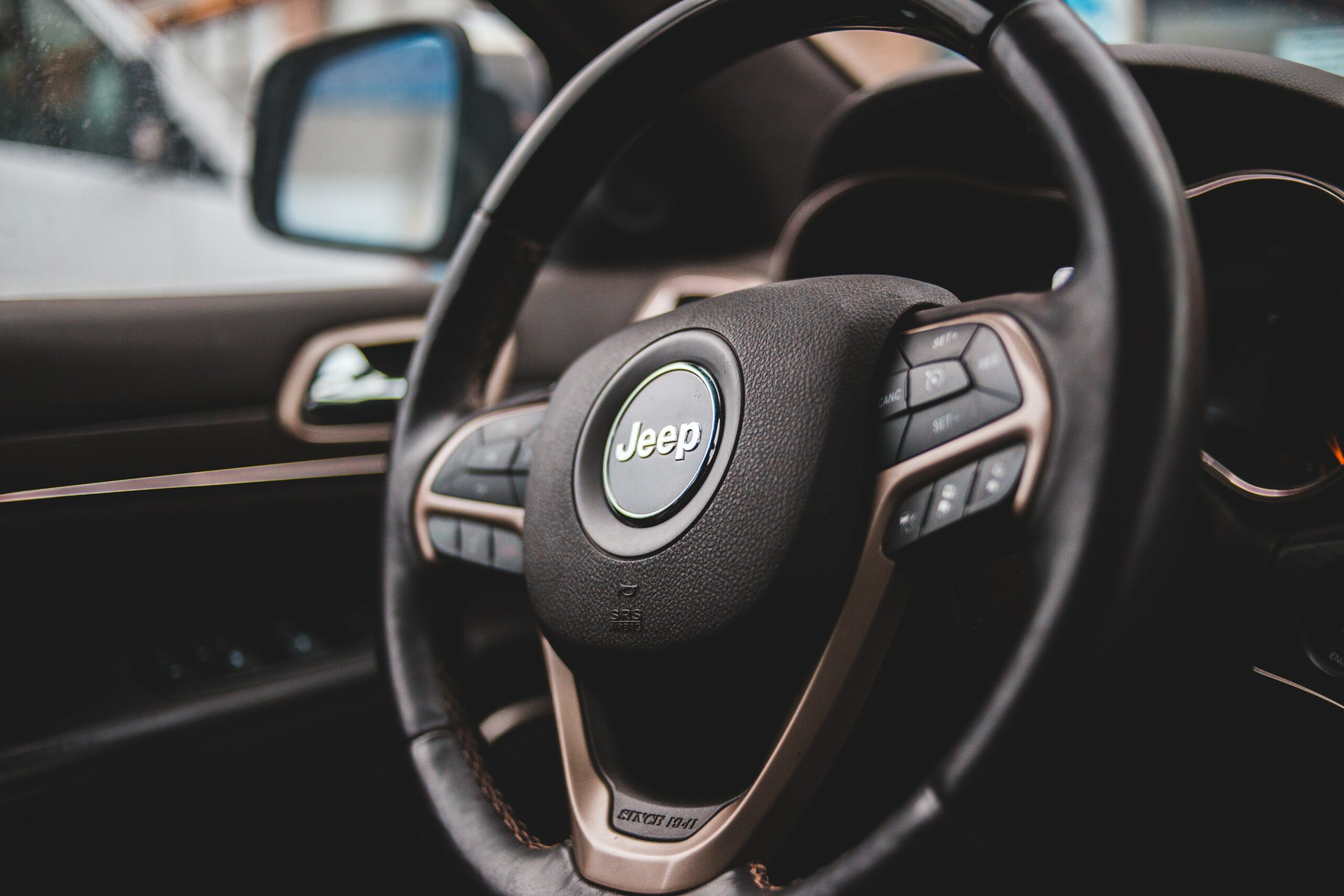
Revision Expanded in October 2026 and re-checked against Jeep owner's manuals, manufacturer data and NHTSA or CPSC records.
Checklist
- Sealed boxes of about 0.4 to 1.0 cubic feet suit most Wrangler installs
- Build to the driver maker's volume range, not to the gap you have
- A ported box for the same 10 inch driver can need 1.25 cubic feet or more
- Volume in cubic feet is internal length x width x depth in inches, divided by 1,728
- Use a weatherproof driver and protect MDF from water if you drive topless
- Bolt the box down: Jeep's manuals warn unsecured cargo becomes a projectile
Procedure
Most Jeep Wrangler subwoofer boxes are small sealed enclosures of about 0.4 to 1.0 cubic feet of internal volume, holding a single 8 or 10 inch driver. The right volume is the one the driver’s manufacturer specifies, so the plan starts with measuring the space you have and choosing a driver whose recommended range fits it.
A Wrangler is not a sedan with a big trunk. Space is tight, the cabin is noisy, and with the top off a lot of bass simply leaves the vehicle. That pushes most builds toward compact sealed boxes in a rear corner or behind the rear seat.
What Jeep fitted at the factory
Before building anything, check whether your Jeep already has a subwoofer. On the JK, the 2008 owner’s manual describes a rear subwoofer on equipped two-door models that has to be unbolted (three T30 Torx screws) and unplugged before the rear seat can come out. Jeep’s 2014 write-up on the Wrangler’s Alpine system describes the subwoofer in the 2015 Alpine system as flush with the cargo floor, bolted to the chassis and weatherproof, and says the system re-equalizes as the top is removed. The 2017 Wrangler fact sheet lists the optional Premium Alpine package as nine speakers, a subwoofer and a 552-watt amplifier.
On the JL, the 2023 owner’s manual notes that vehicles equipped with a rear subwoofer also get a battery-powered power outlet in the rear cargo area. If you have the factory sub, the simplest upgrade is often a replacement driver or a vehicle-specific enclosure designed for that location.
Where a subwoofer box can go
The location decides the volume, so pick it first.
- A rear cargo corner. The wheel well and side panel leave an odd-shaped gap that a wedge-shaped box uses well. This is where many vehicle-specific enclosures go, and it keeps the middle of the cargo floor clear.
- Behind the rear seat, standing against the seatback. Usually the most volume available, at the cost of some load length, and the box must not stop the seat folding or locking.
- Under a seat. Very shallow, so it suits shallow-mount 8 and 10 inch drivers in boxes of about 0.4 to 0.5 cubic feet. Check seat travel and anything mounted under the seat first.
- The factory subwoofer location, if your Jeep has one. A drop-in replacement keeps the factory look and wiring.
On a two-door, cargo space is small enough that a box behind the seat can take most of it. On a four-door there is more room, but owners who carry gear usually still choose a corner box.
Sealed or ported in a Wrangler
| Sealed | Ported (vented) | |
|---|---|---|
| Space needed | Small | Much larger for the same driver |
| Example: Kicker CompRT 10 | 0.4 to 2.0 cu ft | 1.25 to 1.75 cu ft |
| Output per watt | Lower | Higher around the port tuning |
| Tolerance of build errors | Forgiving | A mistuned port sounds worse than a sealed box |
| Best fit | Under or behind a seat, cargo corners | Cargo area, if you can give up the space |
The example figures come from Kicker’s CompRT 10 specifications, a shallow 10 inch driver with a mounting depth of 3-7/16 inches and a 9-1/8 inch mounting diameter. Kicker also describes its cone and surround as weatherproof, which matters in a topless Jeep. Other drivers have different ranges, which is the point: read the sheet for the driver you buy.
For most Wrangler owners, sealed is the right call. The extra output of a ported box comes at the cost of cargo space a Wrangler rarely has to spare.
How to work out the box volume
Box plans are simple arithmetic once you know the target. Measure the inside of the box in inches, multiply length by width by depth, and divide by 1,728 to get cubic feet. That is the gross volume. Then subtract:
- The driver’s displacement, from its spec sheet. Shallow-mount drivers displace little; larger ones can take a noticeable share of a small box.
- Bracing, by measuring each brace and adding up its volume.
What remains is the net volume, which is the number to match to the manufacturer’s range. For a wedge-shaped corner box, average the front and back depths, then multiply by height and width.
Sample sealed box dimensions
These are internal dimensions for rectangular sealed boxes, before subtracting the driver and bracing. Add 1.5 inches to each measurement for the outside size if you build from 3/4 inch board.
| Target gross volume | Internal size (L x H x D, inches) | Outside size with 3/4 in board | Typical use |
|---|---|---|---|
| 0.40 cu ft | 14 x 11 x 4.5 | 15.5 x 12.5 x 6 | Shallow 10 inch, low-profile spaces |
| 0.50 cu ft | 16 x 12 x 4.5 | 17.5 x 13.5 x 6 | Shallow 8 or 10 inch |
| 0.75 cu ft | 16 x 12 x 6.75 | 17.5 x 13.5 x 8.25 | Standard-depth 8 or 10 inch |
| 1.00 cu ft | 18 x 12 x 8 | 19.5 x 13.5 x 9.5 | 10 inch, behind the rear seat or cargo corner |
Check two things against your driver before cutting: the internal depth must clear its mounting depth with room to spare, and the baffle must be wide enough for its mounting diameter plus the frame around it. Then measure the actual spot in your Jeep with the seat in every position you use, the tailgate closed and any cargo you carry. Fit varies between two-door and four-door models and by trim, so trust your tape measure over anyone’s general rule.
Building a box that survives a Wrangler
- Brace large panels. A flexing panel loses output and buzzes over washboard roads.
- Seal every joint with glue and sealant. A sealed box that leaks air is not sealed.
- Protect it from water. MDF swells when wet. If you drive topless, seal the wood thoroughly, carpet or coat it, or use a moisture-resistant plywood or a molded enclosure.
- Bolt it down. The JK manual warns that unsecured cargo can become a projectile off road, and the JL has cargo tie-downs on the floor for securing loads. Use solid mounting points, not just Velcro.
- Keep it clear of the seats’ moving parts and the seat latches, and make sure folding seats still lock fully.
Power, wiring and the battery
An aftermarket subwoofer needs an amplifier, and the amplifier needs a properly fused power feed sized and installed to the amplifier maker’s instructions. The JL manual lists aftermarket audio systems among the add-ons that can contribute to low battery charge and Battery Saver messages, and the same logic applies on a JK. If the Jeep already struggles to start or you add a big amplifier, see why a Wrangler won’t start and keep battery testing on your maintenance checklist. Phone and accessory power draw is covered in the Wrangler USB port guide.
Setting expectations with the top off
A closed cabin reinforces low bass. Take off the top and doors, and much of that reinforcement disappears, which is why Jeep tuned its own Alpine system to re-equalize when the top comes off. No box design cancels this out. If your Jeep spends summer topless, a sealed box tuned for a natural, tight response will sound better outdoors than a box built purely for peak output in a closed cabin. Plan the build around how you drive it, and see how to remove Wrangler doors and the hard top for the storage side of going topless.
Troubleshooting
Owners also ask
Q1 What size subwoofer box fits a Jeep Wrangler?
Most practical builds land between 0.4 and 1.0 cubic feet of internal volume, which suits one 8 or 10 inch driver in a sealed box. Measure the cargo corner, the space behind the rear seat or under a seat before choosing the driver, and check that the driver's recommended volume range fits that space.
Q2 Is a sealed or ported box better in a Jeep Wrangler?
Sealed, for most owners. It needs far less space and tolerates small volume errors. Kicker's CompRT 10, for example, is rated for sealed boxes from 0.4 cubic feet but needs at least 1.25 cubic feet vented. Ported boxes are louder for the same power, but a Wrangler rarely has room for one without giving up cargo space.
Q3 Can you add a subwoofer to the factory Jeep Wrangler stereo?
Yes, but how depends on the system. Wranglers with the premium Alpine package already have a factory subwoofer, and several audio brands sell vehicle-specific powered or loaded enclosures for the JK and JL. On base systems you need an amplifier and a way to take a signal from the factory head unit, which an audio shop can match to your exact radio.
Q4 Does taking the top off affect subwoofer bass?
Yes. A closed cabin reinforces low bass, and with the top and doors off much of that reinforcement is gone, so the same system sounds thinner. Jeep's own Alpine system was designed to re-equalize as the top comes off. Expect less low bass topless, and do not try to make up for it with more power than the driver is rated for.
Q5 What wood should I use for a Jeep subwoofer box?
Three-quarter inch MDF is the usual material because it is dense and easy to cut, but it swells if it gets wet. In a Wrangler driven topless, seal it well with paint or resin and carpet, or use a moisture-resistant plywood or a molded enclosure, and choose a driver its maker describes as weatherproof.
See also
Next in the manual

Warning lights
Tire Pressure Light Blinking on a Jeep: What It Means and How to Fix It
A tire pressure light blinking on a Jeep Wrangler, flashing for about 75 seconds after startup and then staying solid, means the tire pressure monitoring system has a fault, not that a tire is low. Common causes are a sensor with a dead battery, a sensor damaged during a tire change, wheels without sensors, or radio interference. A light that is solid from the start means at least one road tire is underinflated.
Ownership
Why Does My Jeep Wrangler Alarm Keep Going Off? Causes and Fixes (JK and JL)
A Jeep Wrangler alarm that keeps going off usually has a simple trigger: a door opened from inside after locking with the fob, a battery reconnected while the system was armed, the panic button pressed in a pocket, or a door or swing gate switch reporting open. Press unlock on the fob or switch the ignition on to stop it, then rule those out before suspecting a module.
Warning lights
Jeep Wrangler Lightning Bolt Light: What the ETC Warning Means and How to Fix It
The lightning bolt light on a Jeep Wrangler dashboard is the Electronic Throttle Control (ETC) warning. It means the engine computer has found a fault in the throttle body, the accelerator pedal sensor or their wiring. If it stays on steadily, the Jeep is usually drivable but needs service soon. If it flashes, Jeep says immediate service is required: expect reduced power, a rough idle or stalling, and possibly a tow.