OG-0111 Warning lights
Jeep Wrangler Traction Control Light and Loss of Power: Causes and Fixes
By the Offroad Grip editors 7 min read Rev. Oct 6, 2026
Revision Expanded in October 2026 and re-checked against Jeep owner's manuals, manufacturer data and NHTSA or CPSC records.
Checklist
- Flashing light while wheels slip is normal: ease off the throttle
- Steady light plus reduced power means a fault and usually a limp mode
- On a JK, the ESC OFF light staying on in 4L is normal behavior
- A JK transmission in limp mode holds second gear; a JL may also limit gears or stall
- Read engine, transmission and ABS codes before replacing parts
- Stall recalls exist for 2007 JKs, 2021 manual JLs and 2020 to 2023 EcoDiesels
Procedure
When the traction control light on a Jeep Wrangler comes on with a loss of power, the first question is whether the light is flashing or steady. Flashing means traction control or stability control (ESC) is working right now, braking a spinning wheel and trimming engine power on a slick surface. That is normal. A steady light means the system has a fault, and when power drops at the same time, the engine or transmission computer has usually put the Jeep into a protective limp mode.
Steady light plus low power is two things happening together: the traction aids have shut down, and something has made the powertrain protect itself. The usual triggers are a wheel speed sensor, an electronic throttle fault, a transmission temperature or fluid problem, a failing brake light switch, or low voltage. This page covers that combination. If only the ABS light is on, start with the ABS light guide.
Flashing, steady or ESC OFF: reading the light
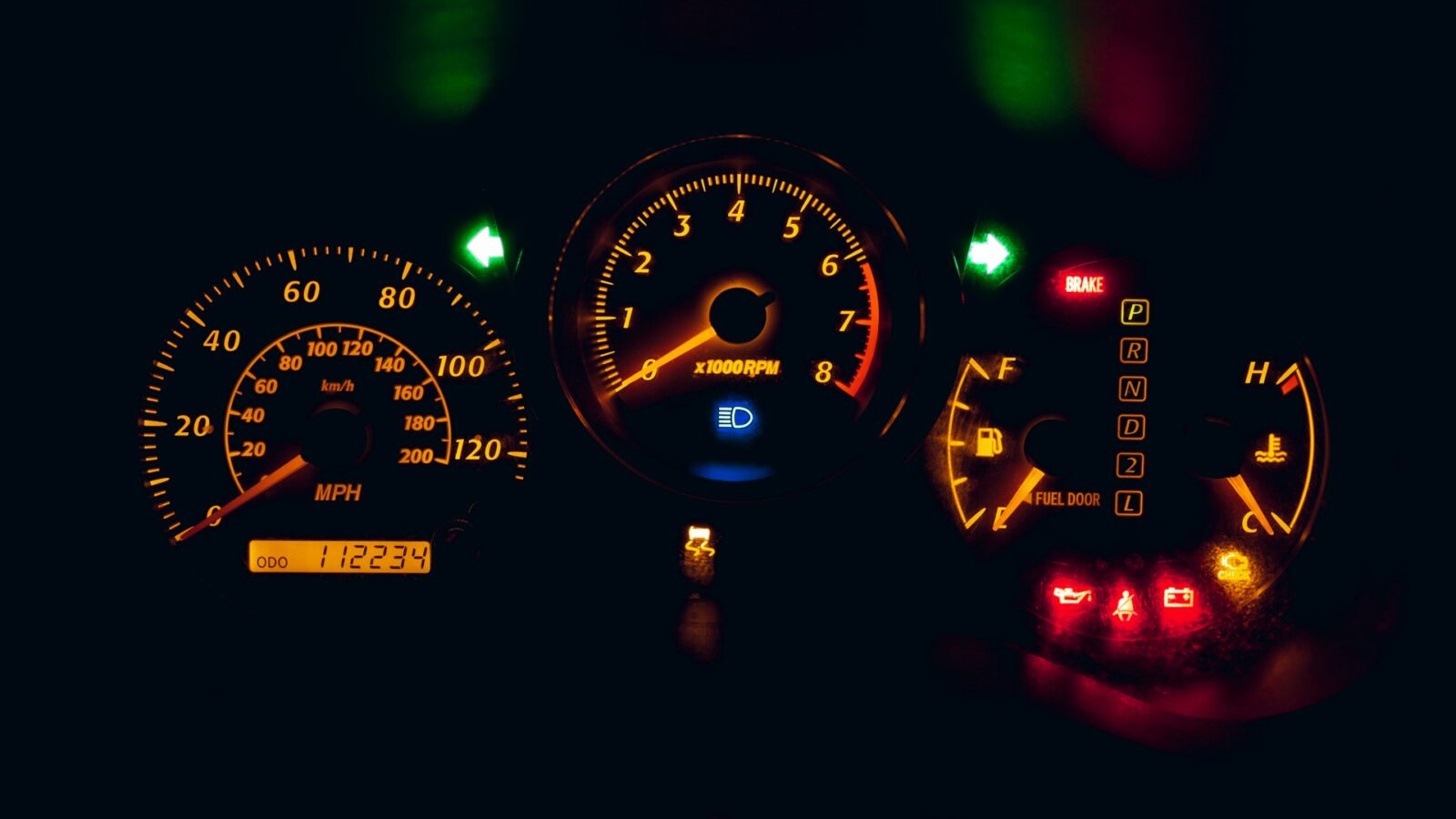
Wranglers use one combined symbol, a car with skid marks, for traction control and ESC. The 2021 JL owner’s manual calls it the ESC Activation/Malfunction Indicator Light. A second symbol with the word OFF tells you ESC is in a reduced mode.
| Light behavior | Meaning | What to do |
|---|---|---|
| Skid symbol flashes while driving | ESC or traction control is active | Ease off the throttle, adapt your speed |
| Skid symbol steady with engine running | Malfunction detected in ESC | If it stays on after several restarts and a few miles above 30 mph, get it diagnosed |
| ESC OFF light on | You (or the Jeep) selected Partial Off or Full Off | Short press of ESC OFF returns to normal; every restart turns ESC back on |
| ESC OFF on in 4L (JK) | Normal: ESC goes to Full Off in 4L at low speed | Nothing; it is by design |
| Steady skid symbol + low power + check engine or lightning bolt | Powertrain fault with limp mode | Read engine and transmission codes; limit driving |
The JK point catches many owners. The 2017 JK owner’s manual says that in 4L, ESC and traction control (except brake limited differential) are turned off until about 40 mph, and the ESC OFF light is always on in 4L. Shift back to 4H or 2H and it should go out. If you are unsure which mode you are in, the 4WD guide explains 2H, 4H, 4H Auto and 4L.
Why a Wrangler loses power with the traction light on
There are two different kinds of “loss of power”, and they have different causes.
Traction control cutting throttle. Jeep’s manuals say traction control may brake a spinning wheel and reduce engine power. If the system believes a wheel is slipping, it pulls power even on dry pavement. A wheel speed sensor sending a false low reading can make the system think the other wheels are spinning. The Jeep feels sluggish, the ABS light usually comes on too, and there is often no engine code.
Limp mode. The engine or transmission computer has detected a fault it considers risky and restricts the powertrain. The JK manual says a JK transmission in limp home mode stays in its current gear until you stop, then holds second gear whatever you select. The JL manual says the transmission may operate only in certain gears or not shift at all, performance may be severely degraded and the engine may stall. Traction control drops out alongside because it can no longer control engine torque. The check engine light, the transmission temperature light or the lightning bolt (electronic throttle) light usually appears too.
The common causes, in the order to check them
Low battery voltage or poor grounds
Low voltage makes several modules report faults at once. If traction control, ABS, airbag and check engine lights arrived together, test the battery and alternator before anything else. On JLs with engine stop/start, a failing auxiliary battery also produces warnings.
Wheel speed sensor or wiring
The single most common cause of a steady traction control light, because traction control, ESC and ABS all depend on the four wheel speed signals. ABS and traction lights together point here. Sensor location, testing and replacement are covered in wheel speed sensor problems.
Electronic throttle body or pedal sensor
If the throttle position does not match what the pedal asks for, the engine computer limits power and lights the lightning bolt. A dirty throttle body, a loose connector after a water crossing, or a failing pedal sensor are typical. Traction control shuts off because it can no longer trim torque.
Transmission temperature or fluid
If the problem appears after towing, a long climb, or slow technical trail driving in heat, suspect the transmission. The JL manual warns that continuing to drive with the transmission temperature light on can boil the fluid over and eventually cause severe damage. Let it cool at idle in park or neutral, and have the fluid level and condition checked.
Brake light switch
ESC and traction control read the brake switch. A switch that reports the brakes as applied when they are not, or the reverse, confuses the system. NHTSA recall 18V-098 covered 2017 Wranglers whose brake switches could malfunction, keeping the brake lights on or allowing a shift out of park without the pedal pressed.
Steering angle sensor and modifications
ESC compares the steering angle with the direction the Jeep is actually turning. After an alignment, steering work or a lift, a steering angle sensor that is out of calibration can set an ESC fault. The JL manual also says changes to suspension, steering, brakes, tire type and size or wheel size can adversely affect ESC. Very large tires without recalibrating the tire size are a common trigger.
Engine misfire or sensor faults
Many engine faults that set the check engine light also disable traction control, because the system cannot trust engine torque data. A misfire or a failing mass airflow or crank sensor can cause both the power loss and the light. The check engine light guide covers the common Wrangler codes.
Recalls linked to stalling or loss of power
Check your VIN at NHTSA’s recall lookup. These recalls in NHTSA’s records describe stalling or loss of drive power on Wranglers:
- 07V-291: 2007 Wrangler. Power module (TIPM) software could allow the engine to stall.
- 24V-572: 2021 Wrangler and Gladiator with manual transmissions previously repaired under 23V-116. Powertrain control module software could cause a stall and loss of drive power.
- 22V-767 and 23V-263: 2020 to 2023 Wranglers with the 3.0L EcoDiesel. The high pressure fuel pump could fail and stall the engine.
- 18V-098: 2017 Wrangler brake light switch, described above.
What to do when it happens
- Check the light pattern. Flashing on a slippery surface: ease off and carry on. Steady: continue below.
- Make sure ESC is not simply switched off, and that you are not in 4L on a JK.
- Pull over somewhere safe and restart. Both manuals describe a reset for a momentary transmission problem: stop, shift to park (neutral on a JL if park will not engage), switch the engine off, wait about 10 seconds on a JK or about 30 seconds on a JL, then restart. If the fault was momentary, normal operation returns. Jeep still recommends a dealer check afterward, because the cause is stored even when the symptom clears.
- If the transmission temperature light is on, let it cool before driving further.
- Look at the battery terminals and grounds if several lights came on together.
- Have the codes read from every module: engine, transmission and ABS. An engine-only code reader misses half the picture.
- Do not replace parts on a guess. The symptoms overlap heavily and codes narrow them down quickly.
Typical repair costs
Ranges are typical independent-shop prices as of 2026. They vary by generation, engine and region, and dealers charge more.
| Cause | Typical cost |
|---|---|
| Full-system scan | $100 to $180 |
| Battery replacement (main) | $200 to $400 |
| Wheel speed sensor, one corner | $150 to $350 |
| Throttle body cleaning | $80 to $200 |
| Throttle body replacement | $350 to $800 |
| Brake light switch | $80 to $200 |
| Steering angle sensor calibration | $80 to $200 (often with an alignment) |
| Transmission fluid service | $200 to $450 |
Recall repairs cost nothing at a dealer. A transmission that has been overheated repeatedly can need far more than a fluid change, which is why the temperature light deserves a stop rather than a push to the next town.
Can you drive it?
A steady traction control light on its own, with normal power, means you have lost stability and traction aids: drive gently and get it checked, especially before winter or towing. With a loss of power, drive only as far as you need to. Jeep designed limp mode to get you to a dealer, not to finish a road trip, and a Jeep that cannot accelerate is a hazard in traffic. If the engine stalls or power is badly limited, have it towed.
For every other symbol on the cluster, see the Wrangler dashboard lights guide. And if the light appeared the day after a water crossing, start by checking that the throttle body and wheel speed sensor connectors are dry and fully seated.
Troubleshooting
Owners also ask
Q1 Why does my Jeep lose power when the traction control light comes on?
Two possibilities. If the light flashes, traction control is deliberately cutting engine power because a wheel is spinning, which is normal. If the light stays on, a fault has disabled the system and the engine or transmission computer has often gone into a protective mode at the same time, with reduced throttle or a locked gear. Reading the codes tells you which module started it.
Q2 How do I reset the traction control light on my Jeep Wrangler?
Make sure you have not switched ESC off by pressing the ESC OFF button, and on a JK remember the ESC OFF light stays on in 4L. Then stop, shift to park, switch off for about 10 seconds on a JK or 30 seconds on a JL, and restart. If the light returns after a few miles above 30 mph, Jeep's manual says the system has a real fault that needs diagnosis.
Q3 Is it safe to drive a Wrangler in limp mode?
Only far enough to get it somewhere safe or to a shop. Jeep describes limp mode as a way to reach a dealer without damaging the transmission, but performance may be severely limited and a JL may stall. Merging onto a highway with capped power is a real hazard. If the transmission temperature light is also on, stop and let it cool.
Q4 Can a bad wheel speed sensor cause loss of power in a Jeep?
It can make the Jeep feel down on power. With a bad sensor signal, traction control may misread a wheel as spinning and cut throttle, and the ABS, traction control and ESC lights usually all come on together. A failed sensor rarely causes true engine limp mode on its own, so if the check engine light is also lit, look for a second fault.
Q5 What does the ESC OFF light mean on a Jeep Wrangler?
It means stability control is in a reduced mode. You switch to Partial Off with a short press of the ESC OFF button and Full Off by holding it for about five seconds while stopped. Every restart turns ESC back on. On a JK, shifting into 4L puts ESC into Full Off automatically, so the light stays on there by design.
See also
Next in the manual
Chimes and switches
How to Turn Off Jeep Wrangler Headlights: Switch, AUTO, DRLs and Delay
To turn off Jeep Wrangler headlights, set the headlight switch to off. On a JL (2018 on) that is the rotary knob on the left of the dashboard; on a JK (2007 to 2018) you twist the end of the left multifunction lever. If they still come on, AUTO, the daytime running lights or the Headlight Off Delay is doing it, and the JL lets you change all three.
Warning lights
Jeep Wrangler Dashboard Lights and Symbols: What Every Warning Light Means
Jeep Wrangler dashboard lights follow a color code. Red means a serious problem or safety issue: stop safely and check it now, for example oil pressure, coolant temperature, brake, battery charge, airbag or the lightning bolt throttle light. Amber or yellow means a fault to fix soon, such as check engine, ABS, tire pressure or traction control. Green, white and blue lights only show a system is on, like headlights, 4WD Auto or high beams.

Chimes and switches
How to Put a Jeep Wrangler in 4-Wheel Drive: 2H, 4H, 4H Auto and 4L Explained
To shift a Jeep Wrangler from 2H to 4H, pull the transfer case lever firmly back while stopped or driving straight; the JL manual prefers 0 to 45 mph. For 4L, roll at 1 to 3 mph (2 to 3 on a JK), shift an automatic into Neutral or press the clutch, move the lever to 4L without pausing in N, then shift back to Drive. Use 4H and 4L only on slippery ground.