OG-0595 Warning lights
Jeep Wrangler Dashboard Lights and Symbols: What Every Warning Light Means
7 min read Rev. Sep 29, 2026
Checklist
- Red lights: stop safely or get service now. Amber lights: service soon. Green, white, blue: information only.
- Oil pressure and coolant temperature lights mean pull over and turn the engine off if they stay on.
- A red brake light with the parking brake off can mean low fluid or a hydraulic fault.
- A flashing check engine light means a severe misfire; a flashing ESC light means it is working.
- ABS, traction and ESC lights on together usually point to one wheel speed sensor.
- The lightning bolt is the electronic throttle control warning, red on both JK and JL.
- The JL has more lights than the JK, including hood open, swing gate and Stop/Start.
Procedure
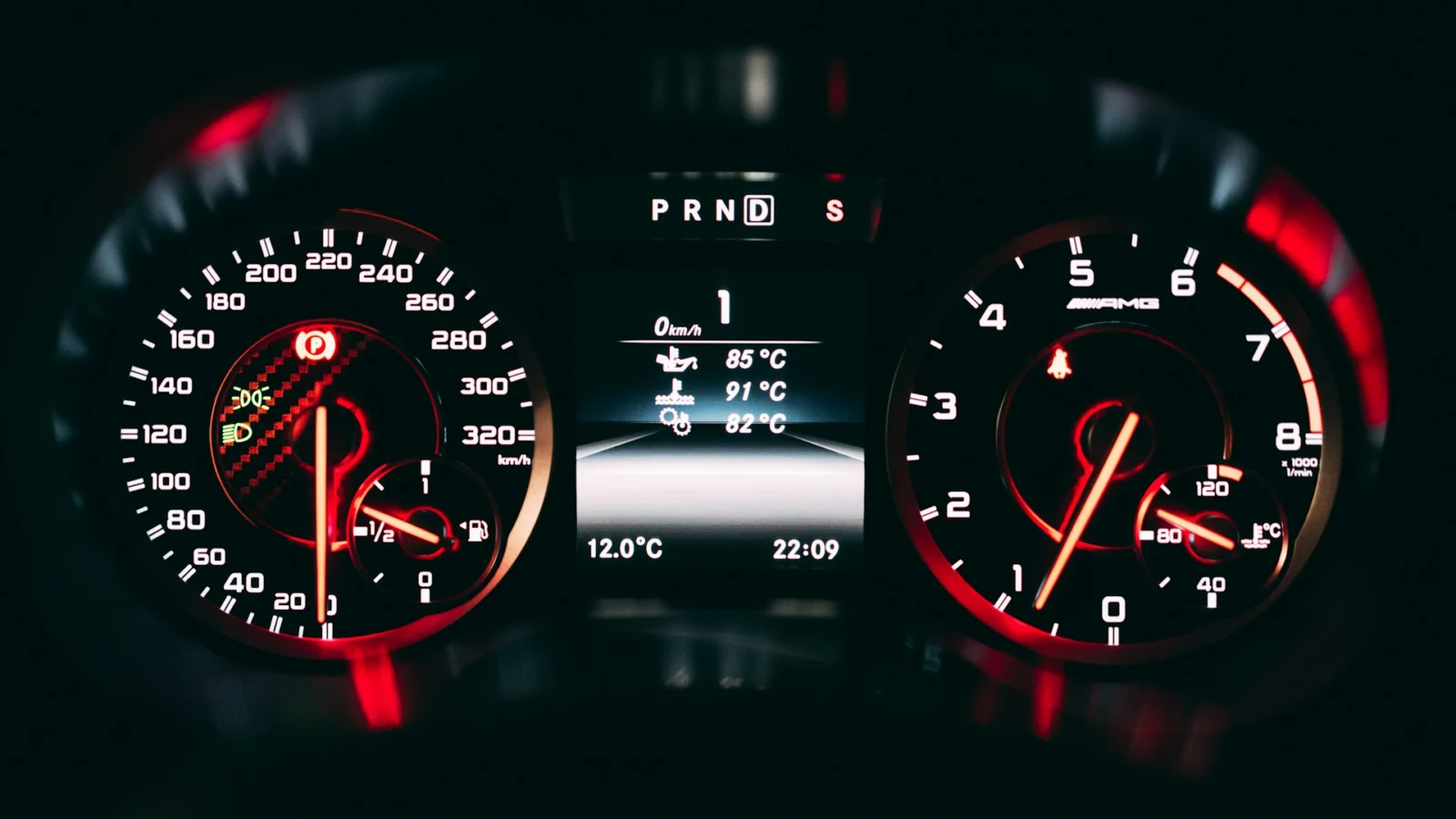
Jeep Wrangler dashboard lights use a traffic-light color code. Red warning lights mean a serious fault or a safety issue: stop safely and deal with it now. Amber or yellow lights mean a system has a fault or needs attention soon, but the Jeep is usually drivable. Green, white and blue lights are indicators that simply show a feature is on, such as headlights, 4WD Auto or high beams.
This guide covers the JK (2007 to 2018) and JL (2018 on) Wrangler, including the 4xe plug-in hybrid, based on Jeep’s 2017 JK and 2021 JL owner’s manuals. The JL has more lights than the JK, and Jeep notes that some lights are optional and may not appear on your vehicle. Every light should come on briefly as a bulb check when you turn the ignition on, then go out. A light that never comes on at startup should be checked too.
Red warning lights: stop and check now
| Light | Symbol | What it means | What to do | JK / JL |
|---|---|---|---|---|
| Oil pressure | Oil can with a drip | Low engine oil pressure | Stop and turn the engine off as soon as it is safe. Check oil level. Do not drive until fixed | Both |
| Engine coolant temperature | Thermometer in liquid | Engine overheating | A/C off, pull over, idle in Neutral; turn engine off if it stays hot | Both |
| Brake | (!) in a circle, or BRAKE | Parking brake on, low brake fluid, or hydraulic or booster fault | Release parking brake; if it stays on, have brakes checked immediately | Both |
| Battery charge | Battery with + and − | Battery not charging properly | Turn off accessories, get the charging system checked soon | Both |
| Air bag | Seated person with a circle | Airbag or seat belt pretensioner fault | Have it checked soon; airbags may not deploy | Both |
| Electronic throttle control | Lightning bolt between brackets | Throttle system fault | Steady: service soon. Flashing: immediate service | Both |
| Seat belt reminder | Person with belt | Driver or front passenger unbuckled | Buckle up | Both |
| Vehicle security | Car outline with a lock | Alarm armed, or key not recognized | Try the spare key if the engine will not stay running | Both |
| Transmission temperature | Gear with a thermometer | Transmission fluid too hot | Pull over and idle in Park or Neutral until it cools | JL (if equipped) |
| Oil temperature | Oil can with a thermometer | Engine oil too hot | Pull over, let the engine idle and cool | JL |
| Power steering (EPS) fault | Steering wheel with ! | Steering assist fault | Expect heavier steering; get it serviced | JL |
| Door open, hood open, swing gate open | Vehicle outline | A door, the hood or the tailgate is not closed | Close it fully | JL |
Oil pressure is the one to never ignore. Jeep’s JL manual says that if the light and chime come on while driving, stop and turn off the engine as soon as possible, restart and watch the light, and if it stays on, turn the engine off and do not operate the vehicle until the cause is fixed. It also notes the light does not show how much oil is in the engine, so check the dipstick.
The coolant temperature light comes with a chime that becomes continuous for up to four minutes if the temperature reaches the upper limit. The full on-road procedure is in Jeep Wrangler overheating.
The red brake light covers more than the parking brake. Jeep’s JL manual says it can indicate low brake fluid, a hydraulic malfunction or a brake booster problem, that it may flash briefly in sharp corners when fluid moves, and that driving with it on is dangerous. If it comes on together with the ABS light, the manual says the electronic brake force distribution may have failed and immediate repair is required.
The lightning bolt is covered in detail in the Wrangler lightning bolt light guide, and the seat belt light and chime in how to turn off the Wrangler seat belt alarm. A security light that flashes while the alarm keeps sounding is covered in why a Wrangler alarm keeps going off.
Amber and yellow warning lights: service soon
| Light | Symbol | What it means | What to do | JK / JL |
|---|---|---|---|---|
| Check engine (MIL) | Engine outline | Engine or emissions fault; flashing means severe misfire | Solid: read codes soon. Flashing: reduce load, service immediately | Both |
| ABS | ABS in a circle | Anti-lock system off due to a fault | Normal brakes still work; get it diagnosed | Both |
| ESC active / ESC off | Car with skid marks (OFF for disabled) | Flashing: stability or traction control is working. Solid: fault or switched off | Ease off if flashing; if solid and not switched off, get it checked | Both |
| Tire pressure (TPMS) | (!) in a horseshoe | Solid: low tire. Flashing then solid: system fault | Check all four tires with a gauge | Both |
| Low fuel | Fuel pump | Fuel is low | Refuel soon | Both |
| Loose fuel cap | Fuel cap | Gas cap loose or missing | Tighten until it clicks | JL (JK shows gASCAP message) |
| Service 4WD | 4WD text | Transfer case or 4WD system fault | Get it checked before relying on 4WD | JL |
| Service Stop/Start | A with arrow and text | Stop/Start fault, often auxiliary battery | Test both batteries | JL |
| Sway bar fault / axle locker fault | Sway bar or axle symbols | Disconnect or locker fault | Reconnect sway bar before road speeds; get it checked | Rubicon |
| Service forward collision warning, cruise fault | Text or symbols | Driver assist fault, often a dirty sensor | Clean sensors; service if it stays on | JL |
| Low washer fluid | Windshield with spray | Washer fluid low | Top up | JL |
| Water in fuel, wait to start, AdBlue | Diesel-specific symbols | EcoDiesel alerts | Follow the diesel section of the manual | JL EcoDiesel |
ABS, traction and ESC lights together almost always trace back to one wheel speed sensor, because all three systems use the same sensors. Start with the ABS light guide and wheel speed sensor problems. If power drops at the same time, see the traction control light and loss of power guide.
The check engine light has its own guide with the common Wrangler codes: Jeep Wrangler check engine light. A loose gas cap is one of the most common triggers, covered in the gas cap light guide.
The tire pressure light is worth understanding on a Jeep, because owners change tires and wheels often. A light that flashes for about a minute and then stays on usually means a sensor problem rather than a low tire; see tire pressure light blinking on a Jeep.
Amber 4WD and off-road indicators
Some amber lights are indicators, not warnings. They confirm a mode you selected:
- 4WD and 4WD Low: the transfer case is in 4H or 4L.
- 4WD Part Time (five-position JL transfer cases): 4H PT is engaged.
- Front and rear axle lock / rear axle lock (Rubicon): lockers engaged. They flash until the lockers have fully engaged or released.
- Sway bar (Rubicon): the front sway bar is disconnected.
- Neutral: the transfer case is in N, for flat towing.
A flashing 4WD light usually means the shift has not completed. The guide to putting a Wrangler in 4WD explains each mode and the correct shifting procedure.
Green, white and blue indicator lights
| Light | Color | Meaning |
|---|---|---|
| Turn signals | Green | Flashing arrows; fast flashing usually means a bulb is out |
| Parking lights / headlights on | Green | Exterior lights are on |
| Front fog lights | Green | Fog lights on |
| 4WD Auto | Green | Five-position transfer case in 4H AUTO (JL) |
| Stop/Start active | Green | Engine has auto-stopped at a stop (JL) |
| Cruise control SET | Green | Cruise is holding a speed |
| Adaptive cruise with or without target | Green | Adaptive cruise status (JL, if equipped) |
| Cruise ready | White | Cruise is on but not set |
| 2WD High | White | Transfer case in 2H (JL) |
| Hill descent / Selec-Speed control | White | Low-speed descent control active |
| High beams | Blue | High beams on |
4xe plug-in hybrid lights
The Wrangler 4xe adds its own lights, listed in Jeep’s 4xe hybrid supplement:
- Red “Stop Safely, Vehicle Will Shut Off Soon”: pull over safely and call for service.
- Red hybrid electric vehicle system service: a fault in the high-voltage system.
- Red plug status fault and torque limited: charging fault, or reduced power to protect the system.
- Green Ready to Drive: the 4xe is on and ready, even though the engine may be silent.
- Green plug status: the vehicle is plugged in and cannot be driven until unplugged.
- Max Regeneration: stronger regenerative braking is selected.
Before worrying about a 4xe warning, check the VIN for open recalls; the high-voltage battery recalls are covered in Wrangler 4xe problems.
When several lights come on at once
A cluster full of unrelated warnings, such as ABS, ESC, airbag, check engine and battery together, usually means low system voltage rather than several failures. A weak battery, a loose terminal, a failing alternator or a bad ground confuses every module at once. On a JL, the auxiliary Stop/Start battery can add to the confusion. Test the battery and charging system first, then have all modules scanned. If the Jeep also struggles to start, go to why a Jeep Wrangler won’t start.
Two recalls are worth knowing here. Recall 24V-652 replaced instrument clusters on some 2018 to 2024 JL Wranglers that could short internally and stop displaying gauges and warning lights. Recall 25V-527 addressed a pinched remote start antenna cable on some 2024 and 2025 Wranglers that could stop the tire pressure warning light from working. Check your VIN at NHTSA’s recall lookup.
For a year-by-year view of which Wranglers had which electrical and warning light issues, see Jeep Wrangler problems by year. And when a reminder rather than a warning appears, such as Oil Change Required, how to reset oil life on a Jeep Wrangler shows how to clear it. The rule of thumb that covers every light on this page: red means stop and look, amber means book it in, and anything else is just telling you what is switched on.
Troubleshooting
Owners also ask
Q1 What does the red exclamation point light mean on a Jeep Wrangler?
An exclamation point inside a circle is the brake warning light. It comes on when the parking brake is applied, when brake fluid is low, or when the system detects a hydraulic, booster or electronic brake force distribution fault. If it stays on with the parking brake fully released, Jeep's manual warns that part of the brake system may have failed. Have it checked immediately.
Q2 What is the yellow light with an exclamation point in a horseshoe on my Jeep?
That is the tire pressure monitoring system (TPMS) light. Solid means one or more tires is significantly underinflated; check all four with a gauge and inflate to the pressure on the door placard. If it flashes for about a minute at startup and then stays on, the system itself has a fault, often a sensor after a tire change.
Q3 What does the A with an arrow around it mean on a Jeep Wrangler?
That is the engine Stop/Start indicator on JL Wranglers. A green light means Stop/Start is active and the engine has shut off at a stop to save fuel; it restarts when you release the brake. An amber Service Stop/Start warning means the system has a fault, often related to the auxiliary battery. The system resets to on each time you start the Jeep.
Q4 Why are all my dash lights on in my Jeep Wrangler?
Several unrelated warning lights at once usually mean a voltage problem rather than several failures: a weak battery, a failing alternator, a loose battery terminal or a bad ground. On a JL, the auxiliary Stop/Start battery can also cause odd warnings. Have the battery and charging system tested first, then read codes from all modules.
Q5 What does the lightning bolt light mean on a Jeep Wrangler?
The lightning bolt between brackets is the Electronic Throttle Control (ETC) warning. It means a fault in the throttle body, pedal sensor or their wiring. Jeep says a steady light usually means the vehicle is drivable but needs service soon, while a flashing light means immediate service, with possible reduced power, rough idle or stalling.
Q6 What does the car with squiggly lines mean on a Jeep Wrangler?
That is the Electronic Stability Control (ESC) light. When it flashes while driving, ESC or traction control is actively cutting power or braking a wheel because it detected slip, which is normal on wet, icy or loose surfaces. When it stays on, or shows OFF, the system has been switched off or has a fault. If it stays on with the ABS light, suspect a wheel speed sensor.
See also
Next in the manual

Warning lights
Jeep Wrangler Traction Control Light and Loss of Power
A flashing traction control light is normal: it means the system is actively working on a slippery surface. A light that stays on steady means a fault, and when it comes with a noticeable loss of power the Jeep has usually gone into limp mode. Common causes are a wheel speed sensor, a throttle body or throttle position sensor fault, or a transmission problem.
Chimes and switches
How to Turn Off Jeep Wrangler Headlights
Jeep Wrangler headlights are controlled by the rotary switch on the left of the dashboard, but if they will not switch off the cause is usually the automatic headlight setting or daytime running lights rather than a fault. Turn the switch to the off position rather than AUTO, and check the vehicle settings menu for the daytime running light option.
Ownership
Jeep Wrangler Towing Capacity: What You Need to Know
A two-door Jeep Wrangler is rated to tow 2,000 lb and a four-door Wrangler Unlimited 3,500 lb. Those are the factory figures for recent JK and JL generations, and they assume a properly equipped vehicle. Tongue weight, trailer brakes and how much you have already loaded into the Jeep all reduce what you can safely pull.