OG-0131 Warning lights
ABS Light on Jeep Wrangler: Causes, What to Check First and Repair Costs
By the Offroad Grip editors 8 min read Rev. Oct 6, 2026
Revision Expanded in October 2026 and re-checked against Jeep owner's manuals, manufacturer data and NHTSA or CPSC records.
Checklist
- ABS light alone: conventional brakes still work, anti-lock and traction aids do not
- ABS plus the red brake light means brake force distribution may have failed: repair immediately
- A wheel speed sensor or its harness is the most common cause on JK and JL
- Engine-only code readers cannot see ABS faults; you need a scanner that reads chassis codes
- Oversize tires, lifts and badly installed CB radios can all upset the ABS
- 2007 JKs had two ABS software recalls (06V-493 and 07V-434); check your VIN
Procedure
An ABS light on a Jeep Wrangler means the anti-lock brake system has found a fault and switched itself off. The 2021 JL owner’s manual says the conventional brakes continue to operate normally while the ABS light is on, assuming the red brake warning light is not also lit, but that service is required as soon as possible. The JK manual says the same.
In most cases the cause is at a wheel: a failed wheel speed sensor, a broken wire to it, or a damaged tone ring. This page covers the light itself and every common cause, in the order worth checking them. For the sensor itself (where it sits on a JK or JL, how to test it and how to replace it), see the dedicated sensor guide.
What the ABS light means, and when it becomes urgent
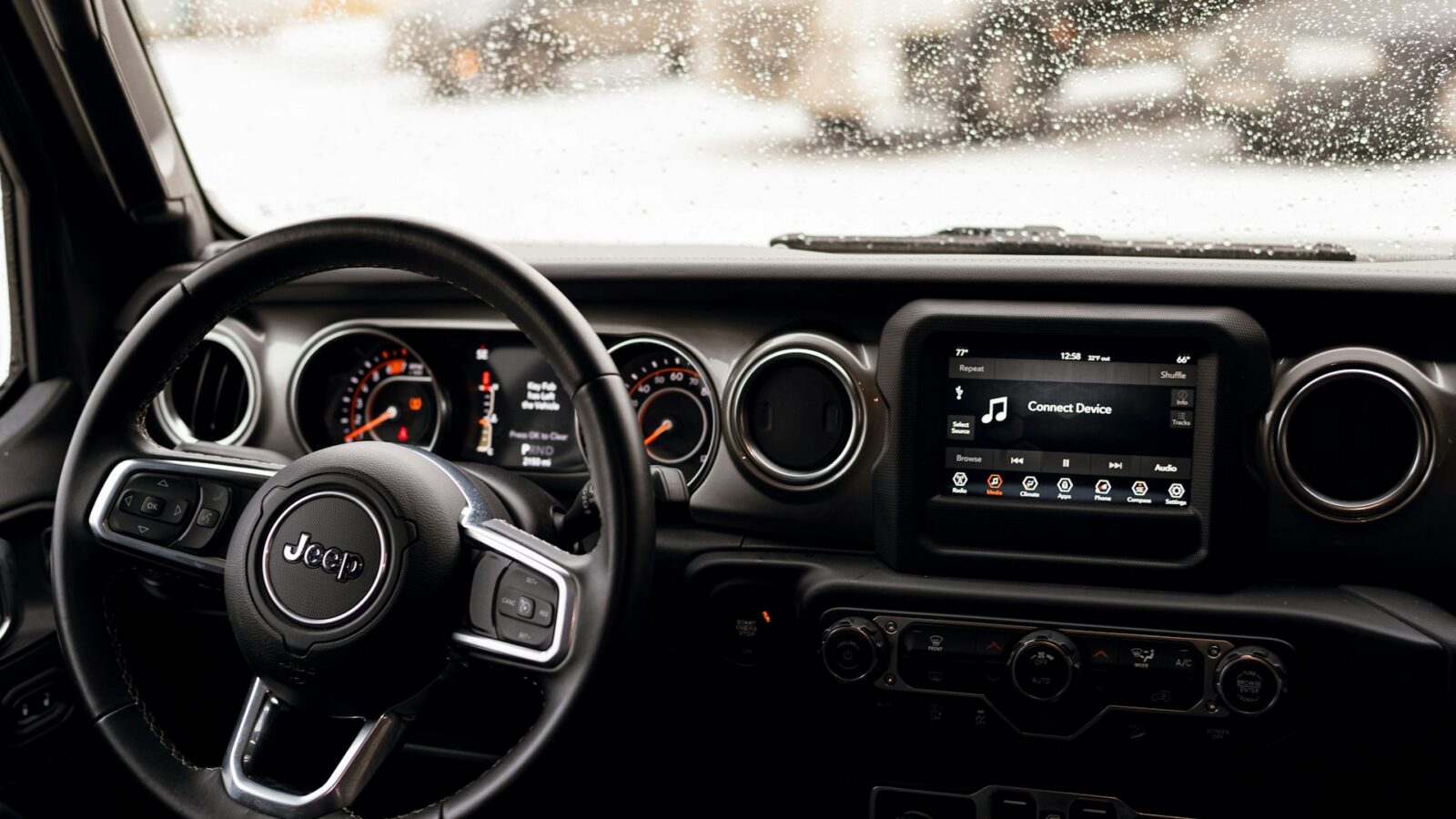
The yellow ABS symbol lights for up to about four seconds every time you turn the key, as a bulb check. If it stays on or comes on while driving, the module has disabled anti-lock braking. Because the same module and sensors run traction control, stability control (ESC), hill start assist and hill descent control, those features usually drop out too.
The combination of lights tells you how serious it is:
| What you see | What it means | What to do |
|---|---|---|
| ABS light only | Anti-lock is off; normal brakes work | Drive gently, book a diagnosis soon |
| ABS + traction control/ESC light | Usually one wheel speed signal lost, which disables all three systems | Read the ABS codes; start with the sensor named |
| ABS + red BRAKE light | Electronic brake force distribution (EBD) may have failed, or there is a hydraulic problem | Stop driving; the JK manual calls this an immediate repair |
| ABS light does not come on at startup | Bulb check failed, so a real fault would not show | Have the warning circuit checked |
| ABS + several unrelated lights | Often low voltage or a network problem rather than a brake fault | Test the battery and charging system first |
The ABS plus BRAKE combination is the one not to drive on. The 2017 JK owner’s manual explains that EBD balances braking between the front and rear axles, and that when EBD fails the brake warning light comes on along with the ABS light. Without it, the rear wheels can lock earlier than the fronts under hard braking.
Causes of the ABS light, in the order to check them
1. Brake fluid level
Free to check and quick. Look at the reservoir on the driver’s side of the firewall. Fluid level falls as the pads wear, so a level near the minimum mark often just means the pads are due. Well below the mark means a leak: check the calipers, the hoses at each wheel and the lines along the frame. Early JKs had recalls for brake tubes that could wear through (see the recall section below).
2. Battery voltage
A weak battery or a corroded ground produces strange, simultaneous warnings across several modules. If the ABS light arrived with the airbag, ESC and check engine lights at the same moment, test the battery before chasing any one of them. The JL with engine stop/start also has a small auxiliary battery that causes its own warnings; see why a Wrangler won’t start for how the two batteries work.
3. ABS fuses
The ABS pump motor and valve circuits are fused in the underhood power distribution center (the TIPM on a JK). The fuse map is on the lid and in the owner’s manual. A blown fuse usually means something shorted, so if it blows again, the fault is in the circuit and not the fuse.
4. Wheel speed sensor or its wiring
By far the most common hard failure. Each wheel has a sensor that reads a toothed ring, and the module compares all four speeds many times a second. A sensor that goes silent or sends an erratic signal shuts the whole system down. On a Wrangler that sees mud, water crossings and road salt, the harness and connector fail as often as the sensor itself, and lifted Jeeps add stretched or chafed wires at full droop. Testing and replacement are covered in the wheel speed sensor guide.
5. Tone ring or hub bearing
The sensor is only as good as what it reads. A rusted, cracked or debris-packed tone ring produces the same codes as a dead sensor. At the front of a JK or JL the ring is part of the hub bearing assembly, so a worn bearing with excess play can also set intermittent ABS faults, often along with a growl that changes with speed.
6. Tire size, lifts and radios
Jeep’s JL manual says the ABS is designed to work with the original equipment tires and that modifications may degrade its performance. Much larger tires change the wheel speeds the module expects, and a mismatched spare in rotation can make one corner read differently from the rest. The same manual warns that improperly installed or high-output radio transmitting equipment can interfere with the ABS electronics, which is relevant to Wranglers with CB or ham radios: route antenna cables away from the ABS module and wheel harnesses, and use a professional installer.
7. ABS module or hydraulic control unit
The expensive answer and the least likely. Module faults do happen, including corrosion at the module connector, but rule out everything above first. A replacement module usually needs programming to the vehicle, which means a dealer or a shop with the right scan tool.
How to diagnose it properly
A basic OBD-II code reader from a parts store reads engine and emissions codes only. ABS faults are stored in the brake module as chassis codes (they start with C), so you need a scan tool that can talk to the ABS module. Most independent shops have one, and mid-range consumer scanners do too.
- Record the codes before clearing anything. The code usually names the circuit and the wheel (left front, right rear, and so on).
- Check whether the code is current or stored. A stored, intermittent fault that comes and goes over bumps points to wiring.
- Watch live wheel speed data on a test drive. All four readings should match closely in a straight line. One that drops to zero or jumps around is your suspect.
- Inspect before buying parts. Look at the connector, the harness routing, the sensor tip and the tone ring at the named corner.
- Clear the code and road-test above 15 to 20 mph. Many wheel speed faults only re-set once the vehicle is moving.
If the codes point somewhere other than a wheel (pump motor, valve relay, module internal fault), that is a shop job. For the engine codes that sometimes appear alongside, see the Wrangler check engine light guide.
ABS-related recalls on the Wrangler
Before paying for brake work, enter your VIN at NHTSA’s recall lookup. The recalls in NHTSA’s records that touch the anti-lock system or its hydraulics on the JK are:
- 06V-493: 2007 Wrangler. ABS module software could cause the rear brakes to lock up under certain braking conditions. Dealers reprogrammed the module.
- 07V-434: 2007 Wrangler. ABS software could allow a momentary delay in braking when coasting up a hill. Dealers reprogrammed the module.
- 10V-315: 2010 Wrangler. The brake tube between the master cylinder and the ABS hydraulic control unit could have an improperly formed flare and leak fluid.
- 10V-236: 2007 to 2010 Wrangler. The front inner fender liners could rub through brake tubes and cause a leak.
As of October 2026, NHTSA’s records show no recall for the JL’s ABS module or wheel speed sensors. Recall repairs are free regardless of mileage, and a used JK may never have had them done. The Wrangler problems by year guide lists the other recalls for each model year.
What it costs to fix an ABS light
Ranges below are typical independent-shop prices as of 2026. Dealer labor rates run higher, and salt-belt Jeeps cost more because seized bolts and broken sensor bodies add time.
| Repair | Parts | Typical total at a shop |
|---|---|---|
| ABS diagnostic scan | None | $100 to $180 |
| Fuse | Under $10 | Under $50 if a shop finds it |
| Wheel speed sensor, one corner | $25 to $120 | $150 to $350 |
| Harness or connector repair | $20 to $100 | $120 to $400 |
| Front hub bearing assembly | $120 to $400 | $350 to $750 per side |
| Brake line repair and bleed | $30 to $150 | $200 to $600 |
| ABS module (with programming) | $400 to $1,200 | $800 to $1,800 |
Prices vary with generation (JL parts often cost more than JK), whether you choose Mopar or aftermarket parts, and how much rust is involved. Bleeding the brakes after opening the hydraulics may require a scan tool to cycle the ABS pump, which is one reason module and line work suits a shop.
Can you keep driving with the ABS light on?
With only the ABS light lit, the Jeep still stops on its conventional brakes, and you can drive it to a shop. Leave more room, brake earlier and expect the wheels to lock if you stand on the pedal on a slick surface. Avoid towing until it is fixed, since trailer sway control runs through the same system.
Two situations change the answer. With the red BRAKE light on as well, park it and have it inspected. And in winter or on the trail, where anti-lock, traction control and hill descent earn their keep, fix it before you go. Our winter driving upgrades guide covers the rest of the cold-weather prep.
If the traction control light is on and the Jeep has also lost power, the problem may be wider than the brakes: see the traction control light and loss of power guide. For every other symbol on the cluster, the Wrangler dashboard lights guide covers them by color. And when the light appears right after a tire change, check the connectors at the corners that were worked on before anything else: it is the cheapest fix there is.
Troubleshooting
Owners also ask
Q1 Is it safe to drive a Jeep Wrangler with the ABS light on?
For a short time, with care. Jeep's manuals say the conventional brakes keep working when only the ABS light is on, but you lose anti-lock braking, traction control and stability control, which matter most on wet roads, snow and gravel. If the red brake warning light is on as well, stop driving and have the brakes inspected, because the manual calls that an immediate repair.
Q2 Why did my Jeep ABS light come on after new tires?
Usually because something at the wheel was disturbed: a sensor connector knocked loose, a harness pinched, or a tone ring damaged while the hub or brakes were off. A tire size much larger than stock can also confuse the system, since Jeep says the ABS is designed for the original equipment tires. Check the connectors at the corner the shop worked on first.
Q3 Will disconnecting the battery reset the ABS light on a Wrangler?
It may turn the light off for a moment, but it does not fix anything. The ABS module runs a self-check every time the Jeep starts and drives, and if the fault is still there the light comes straight back. Read and record the stored codes before clearing anything, because they tell you which wheel or circuit failed.
Q4 How much does it cost to fix the ABS light on a Jeep Wrangler?
As of 2026, a wheel speed sensor typically runs $150 to $350 fitted at an independent shop, a front hub assembly with a new sensor $350 to $750, and an ABS module $800 to $1,800 including programming. Wiring repairs vary with how much harness is damaged. A diagnostic scan usually costs $100 to $180 and is worth paying for first.
Q5 Can low brake fluid turn on the ABS light?
On many vehicles a low fluid switch lights the red brake warning first, but a low reservoir is still the first free check when any brake light appears. Fluid drops as pads wear, so a low level often points to worn pads. If it is well below the minimum mark, look for a leak before topping it up.
See also
Next in the manual
Chimes and switches
How to Turn Off Jeep Wrangler Headlights: Switch, AUTO, DRLs and Delay
To turn off Jeep Wrangler headlights, set the headlight switch to off. On a JL (2018 on) that is the rotary knob on the left of the dashboard; on a JK (2007 to 2018) you twist the end of the left multifunction lever. If they still come on, AUTO, the daytime running lights or the Headlight Off Delay is doing it, and the JL lets you change all three.

Chimes and switches
How to Reset the Oil Life on a Jeep Wrangler (JK and JL)
To reset the oil life on a JK Wrangler (2007 to 2018), turn the ignition to ON without starting the engine, slowly press the accelerator to the floor three times within 10 seconds, then turn the ignition off. On a JL (2018 on), select ON/RUN without pressing the brake, open Vehicle Info, then Oil Life in the cluster, and hold OK until it reads 100%. The pedal method also works on the JL.

Engine swaps
Jeep Wrangler Diesel Conversion Cost: Real Totals, Legality and the Factory EcoDiesel
As of 2026, a Jeep Wrangler diesel conversion typically costs $15,000 to $30,000 as a home build and $35,000 to $60,000 or more from a specialist shop. Fuel savings will not repay it: in late 2026, diesel cost far more per gallon than regular gas. Emissions law is the bigger obstacle. The legal shortcut is a factory 3.0L EcoDiesel Wrangler, sold for the 2020 to 2023 model years.